 By Classic Oldies
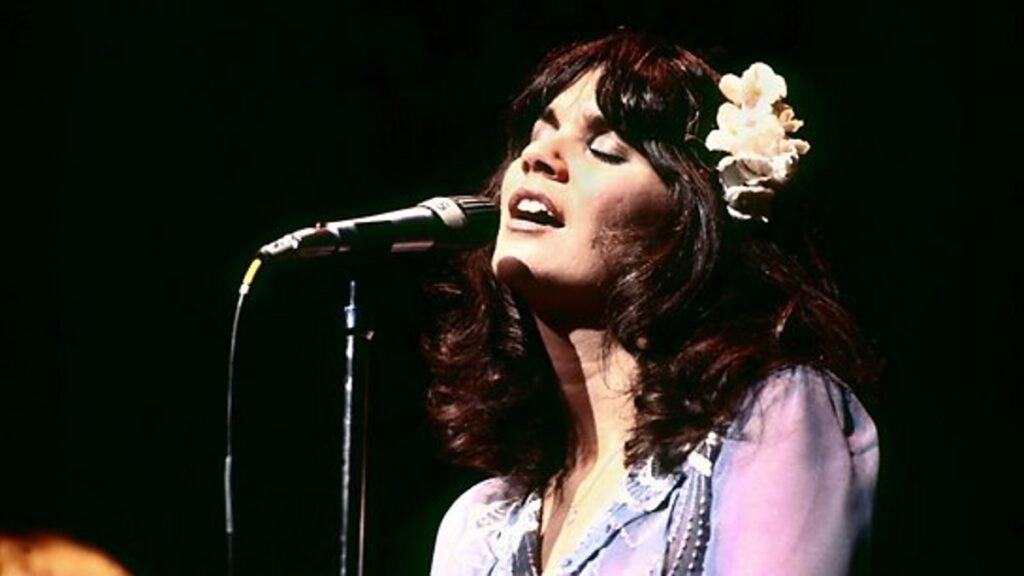
“Carmelita” is a song about wanting rescue without knowing how to be saved—romance and ruin braided together, with Los Angeles humming like a neon prayer in the background.
When Linda Ronstadt sang “Carmelita”, she didn’t turn it into a tidy pop moment. She kept its bruises visible—and that’s why it still feels so alive. Her version appears on Simple Dreams (released September 6, 1977, on Asylum Records, produced by Peter Asher), an album that arrived like a warm front and then simply took over the weather. Simple Dreams made its first appearance on the Billboard 200 at No. 43 (chart dated September 24, 1977). From there it grew into a cultural fixture—eventually spending five consecutive weeks at No. 1 in December 1977. That’s the “launch ranking” that matters most here, because “Carmelita” itself wasn’t positioned as a U.S. hit single—more like a secret room inside a blockbuster house.
And what a room. Because “Carmelita” comes from Warren Zevon, a songwriter who could make a city feel like a character with its own vices and virtues. Zevon first released the song on his 1976 self-titled album Warren Zevon (released May 18, 1976, produced by Jackson Browne). It’s one of those Zevon compositions that wears its wit like a raincoat and its sorrow like a bruise under the sleeve. In a later retrospective, Pitchfork described “Carmelita” as a “junkie’s lament,” set in Echo Park, with the narrator listening to mariachi music and spiraling through craving, loneliness, and that very Los Angeles kind of magical thinking—if I could just get to her, if she could just hold me, maybe I’d stop sinking.
That last word—sinking—is the emotional engine. “Carmelita” isn’t a romantic fantasy so much as a romantic emergency. The narrator is in trouble (chemically, spiritually, geographically), and love becomes the one last bright thing he can still imagine. It’s not pretty, and it’s not meant to be. Zevon writes it with a terrifying tenderness: the details are vivid, almost funny in a grim way, and then the chorus arrives like a hand reaching out in the dark.
So why did Linda Ronstadt—already one of the era’s biggest voices—choose to carry this song into her own world?
Partly because she had a gift for spotting great writers before the world finished catching up. Even basic biographical summaries note that Ronstadt helped popularize Zevon’s songs in the 1970s, and Simple Dreams famously includes more than one Zevon composition. But deeper than “taste” was empathy. Ronstadt could sing characters she wasn’t trying to resemble. She didn’t need to become the narrator; she needed to understand him.
Her “Carmelita” is a fascinating act of translation. Zevon’s original feels like a man talking to himself under a buzzing streetlight—brilliant, damaged, half-laughing at his own collapse. Ronstadt’s version, by contrast, feels like someone telling the story after the fact, with a steadier pulse and a kind of sorrowful grace. She doesn’t sanitize the desperation; she reframes it. In her hands, the song becomes less “look at this wreck” and more “listen—this is what longing does when it’s cornered.”
That reframing is also why the track sits so well on Simple Dreams, an album that moves fluidly between radio-friendly brightness and late-night ache. The record’s commercial momentum was powered by obvious singles, but “Carmelita” works like the shadow behind the smile—proof that the same voice that can soar can also sit beside the broken parts without flinching.
And in a small, collector’s-footnote way, “Carmelita” did have a single-life—just not center stage. In the UK, “Carmelita” appeared as the B-side to Ronstadt’s “Tumbling Dice” single (Asylum K 53065), with discographies listing an April 1978 release window. Even there, it’s telling: the song lives on the flip side. It’s the record you turn over when you want what’s less polished and more true.
Ultimately, “Carmelita” endures because it captures a very adult kind of yearning—the kind that knows it’s bargaining with the wrong gods and prays anyway. And when Linda Ronstadt sings it, that prayer doesn’t sound like spectacle. It sounds like humanity: a voice steady enough to hold the listener, and tender enough to admit that sometimes the heart’s most “sentimental reasons” are the ones that hurt.