 By Classic Oldies
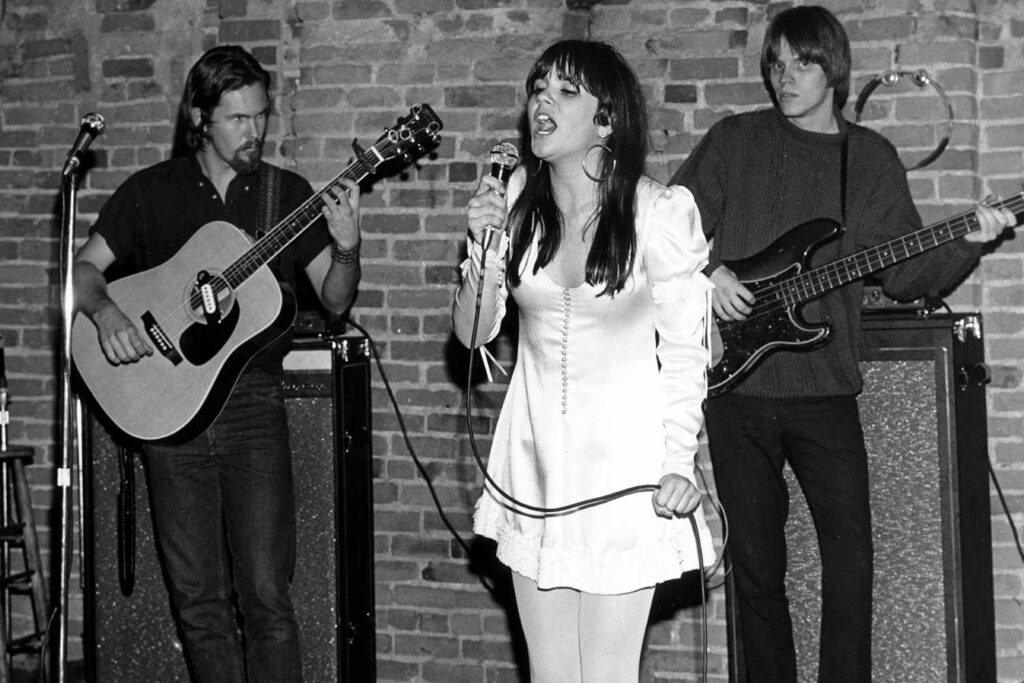
“Maybe I’m Right” is a small, sharp-edged confession—one of those late-night arguments where pride and tenderness keep changing places, and the heart can’t decide whether to stand firm or soften first.
In the shadow of a blockbuster, some songs are destined to be overlooked—yet they often become the ones that feel most private. “Maybe I’m Right” sits exactly in that kind of shadow, tucked into Linda Ronstadt’s 1977 album Simple Dreams (released September 6, 1977)—an album that didn’t merely succeed, it dominated, spending five successive weeks at No. 1 on the Billboard album chart in late 1977. That context matters, because it means Ronstadt wasn’t recording from a place of career anxiety. She was recording from a place of choice. And “Maybe I’m Right” sounds like a choice: lean, unsentimental, emotionally complex in a way that doesn’t beg for attention.
The crucial fact—one that changes how you hear the track—is that “Maybe I’m Right” was written by Waddy Wachtel. Wachtel wasn’t just a name on the label; he was part of the muscle and nerve of that Laurel Canyon–adjacent ecosystem—players who could make a record feel both effortless and alive. On Simple Dreams, the song appears on side two and runs about 3:05, a quick length for something that still manages to leave a bruise. It wasn’t promoted as a major U.S. single, which is why it doesn’t come with an official “debuted at #X” chart story of its own. Instead, its “public life” happened in more subtle ways—one of them being the odd, revealing fate of the B-side. Depending on the country, “Maybe I’m Right” was used as one of the possible B-sides for Ronstadt’s single “Blue Bayou.” That detail feels almost symbolic: a song about uncertain conviction living on the flip side of one of her most luminous, widely embraced performances.
So what is the song really doing?
Emotionally, “Maybe I’m Right” lives in the moment after a disagreement when the room has gone quiet—but your mind hasn’t. It’s not the dramatic break-up scene; it’s the stubborn aftertaste of a conversation you keep replaying, searching for the exact spot where truth and ego swapped masks. The title itself is the hook and the wound: maybe is humility, I’m right is pride—and the two words don’t fully trust each other. That tension is what makes the song feel so human. It doesn’t posture as wisdom. It sounds like someone trying to be honest without losing face.
The recording details underline that intimacy. The album was produced by Peter Asher, and “Maybe I’m Right” was recorded during the May 23–July 22, 1977 sessions at Sound Factory in Los Angeles. The personnel around the track reads like a snapshot of that era’s craft: Waddy Wachtel on acoustic and electric guitar, Kenny Edwards on bass, and a striking little cluster of backing voices—Peter Asher, J.D. Souther, and Wachtel himself. Those background vocals don’t just sweeten the sound; they create the feeling of people in the next room—friends, witnesses, echoes—like memory harmonizing with the present.
And that’s where Linda Ronstadt becomes the final instrument. On a record filled with big, famous moments, she treats “Maybe I’m Right” with a kind of conversational precision. She doesn’t oversell it. She doesn’t turn it into a torch song. She lets it move like a thought you didn’t plan to say out loud. That restraint—especially amid the commercial triumph of Simple Dreams—is part of its lasting charm. The album could afford spectacle; this track chooses candor.
If Simple Dreams is often remembered for its radio giants and its chart-topping shine, “Maybe I’m Right” is one of the places where the shine turns inward. It’s a reminder that even at the height of success, the most recognizable human drama remains the same: wanting to be understood, wanting to be correct, wanting to be forgiven—sometimes all at once, sometimes in the wrong order. And when the song ends, it leaves you with that familiar quiet question that doesn’t belong only to the singer: What if I’m right… and still wrong about what matters most?