 By Classic Oldies
A Dream Reimagined: When Emmylou Harris Turned a 1950s Fantasy into a Country Lullaby
When Emmylou Harris released her version of “Mister Sandman” on the 1981 album Evangeline, she wasn’t merely reviving a nostalgic pop tune from the Eisenhower era—she was refracting it through her own ethereal sensibility. The song, originally written by Pat Ballard and made famous in 1954 by The Chordettes, had long since entered the realm of cultural memory, its lilting melody synonymous with postwar innocence. Yet Harris’s recording brought the dream into a different century, transforming the playful doo-wop confection into something wistful, almost otherworldly. Released as a single that reached the Billboard Country chart’s Top 10, her rendition revealed how an artist grounded in roots music could breathe new life into a mid-century relic without irony or kitsch. It was both homage and reinvention—an act of musical time travel executed with precision and grace.
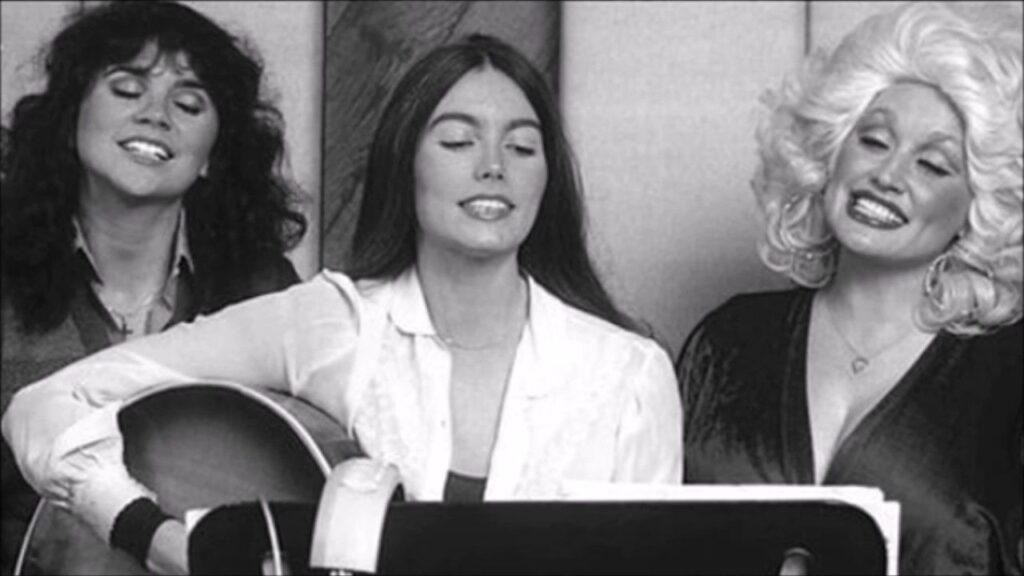
The story of “Mister Sandman” within Harris’s career is one of contrast and context. By the early 1980s, she had already become one of country music’s most respected interpreters—an artist equally at home channeling Appalachian tradition and reimagining contemporary rock material. Evangeline, the album that carried this track, was itself an unusual compilation of studio sessions recorded over several years, featuring collaborations with Dolly Parton and Linda Ronstadt. In that setting, “Mister Sandman” became a whimsical detour amid weightier fare—a sparkling moment of levity framed by the trio’s crystalline harmonies. Their voices—bright, perfectly balanced—echoed the original girl-group charm but were anchored by the warmth of Nashville’s production aesthetic: pedal steel sighs where once there were muted trumpets, brushed percussion replacing the rigid swing of fifties rhythm sections.
Yet beneath its shimmering surface lies an emotional complexity that Harris instinctively understood. The song’s premise—a plea to a mythical figure to deliver the lover of one’s dreams—can be read as pure teenage fantasy, but Harris imbues it with longing and vulnerability. Her phrasing lingers just long enough on certain syllables to suggest that this isn’t merely about romance; it’s about faith in imagination itself, about trusting in the fragile power of desire to make something real. When she sings those softly syncopated lines against the gentle pulse of her band, she transforms naïve yearning into adult melancholy—a subtle commentary on how dreams evolve as we age.
Culturally, Harris’s “Mister Sandman” bridges two musical worlds: it honors pop nostalgia while reaffirming country music’s elasticity as an art form capable of reinterpretation rather than mere preservation. In her hands, what might have been a novelty becomes an essay in tone and texture—a reminder that even songs born from simplicity can carry infinite emotional resonance when revisited with sincerity and skill. It stands as a testament to Harris’s enduring gift: her ability to find humanity inside artifice, turning even a sugar-coated fantasy into something timeless and true.