 By Classic Oldies
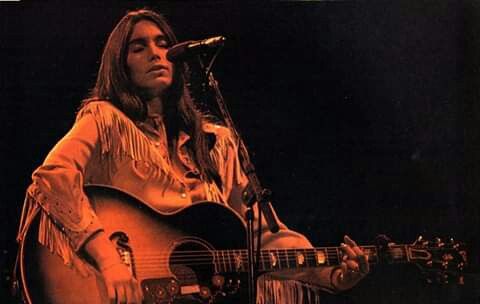
“My Songbird” is Emmylou Harris at her most tender: a vow to protect something fragile and beautiful—love, spirit, or the very voice of a person—before the world can bruise it.
The most important anchor is this: “My Songbird” is written by Jesse Winchester, and Emmylou Harris recorded it for her 1978 album Quarter Moon in a Ten Cent Town (produced by Brian Ahern, recorded in 1977). The album is one of her defining late-’70s statements, reaching No. 3 on Billboard’s country album chart (as commonly summarized in standard discography sources), and it also yielded major singles like “Two More Bottles of Wine” (No. 1) and “To Daddy” (Top 3). “My Songbird” itself was not a charting single—no debut ranking to trumpet—yet it has always felt like the kind of track that outlives chart logic: it’s cherished because it sounds like a private truth that accidentally got recorded.
On the record, “My Songbird” appears as track 4, and Winchester’s authorship matters because he wrote with a rare blend of plain-spoken intimacy and spiritual light. He didn’t decorate emotion; he clarified it. And Emmylou—the greatest “interpreter” of her generation when she chooses to be—knew how to step into that clarity and make it feel like lived experience rather than a performance. Even on an album famous for its big radio moments, this song feels like the room goes quieter when it starts.
The “story behind” “My Songbird” is less about a dramatic anecdote and more about a meeting of sensibilities: Winchester’s writing and Harris’ voice share a particular kindness. In 1978, Harris was balancing commercial momentum with deep artistic intention—still proving, album by album, that country music could be both mainstream and poetically exact. In that context, “My Songbird” reads like an act of deliberate tenderness placed amid bigger, flashier narratives: a reminder that the heart isn’t always loud when it’s most sincere.
The meaning of the song lives in its central image. A songbird is not just a lover; it’s a symbol of something naturally gifted, easily wounded, and impossible to hold by force. To call someone “my songbird” is to admit two truths at once: first, that they bring beauty into the world simply by existing; second, that beauty has a price, because the world has so many ways to silence it—through neglect, through cruelty, through the slow fatigue of being misunderstood. The song’s ache comes from how protective it feels: love here isn’t conquest or possession. It’s guardianship. It’s the desire to keep a delicate spirit safe without clipping its wings.
That’s why Emmylou Harris sings it so effectively. Her voice has always carried a kind of silvery composure—emotion held steady, never spilled for effect. In “My Songbird,” that steadiness becomes the emotional message: the narrator doesn’t sound panicked, but determined, as if she has already learned what the world can do to tender things—and is choosing, consciously, to stand between the beloved and the storm.
And the song’s afterlife strengthens that interpretation. Harris has returned to “My Songbird” in meaningful public moments—one famously documented example is her performance at Farm Aid 1986 (July 4, 1986, Manor Downs, Texas), where the song appears in her setlist and circulating video documentation. That matters because songs artists revisit in benefit settings often carry a deeper personal resonance: they’re the ones that still feel true when the stakes are real and the room is bigger than nostalgia.
So if you’re listening to “My Songbird” today, try hearing it not only as a love song, but as a small philosophy: that the most precious things—talent, gentleness, faith, the ability to sing through hardship—require a different kind of strength around them. In a world that praises hardness, Emmylou Harris offers a quieter bravery here: the courage to remain soft, and to love something soft, without apology.