 By Classic Oldies
“Calling My Children Home” is a gospel doorway song—quietly radiant, as if the living and the departed can still hear one another through the thin walls of memory.
“Calling My Children Home” wasn’t born as a pop single, and Emmylou Harris never treated it like one. The song’s strength has always lived somewhere deeper than chart momentum: it’s a summoning, an old-style spiritual message carried on harmony. In its credited form, it’s written by Doyle Lawson, Charlie Waller, and Robert Yates, and discographical records trace its first release to The Country Gentlemen in 1978. That lineage matters, because it places the song in the modern bluegrass-gospel tradition—music designed to be sung shoulder-to-shoulder, where the “lead” is less important than the way voices lock together and lift the room.
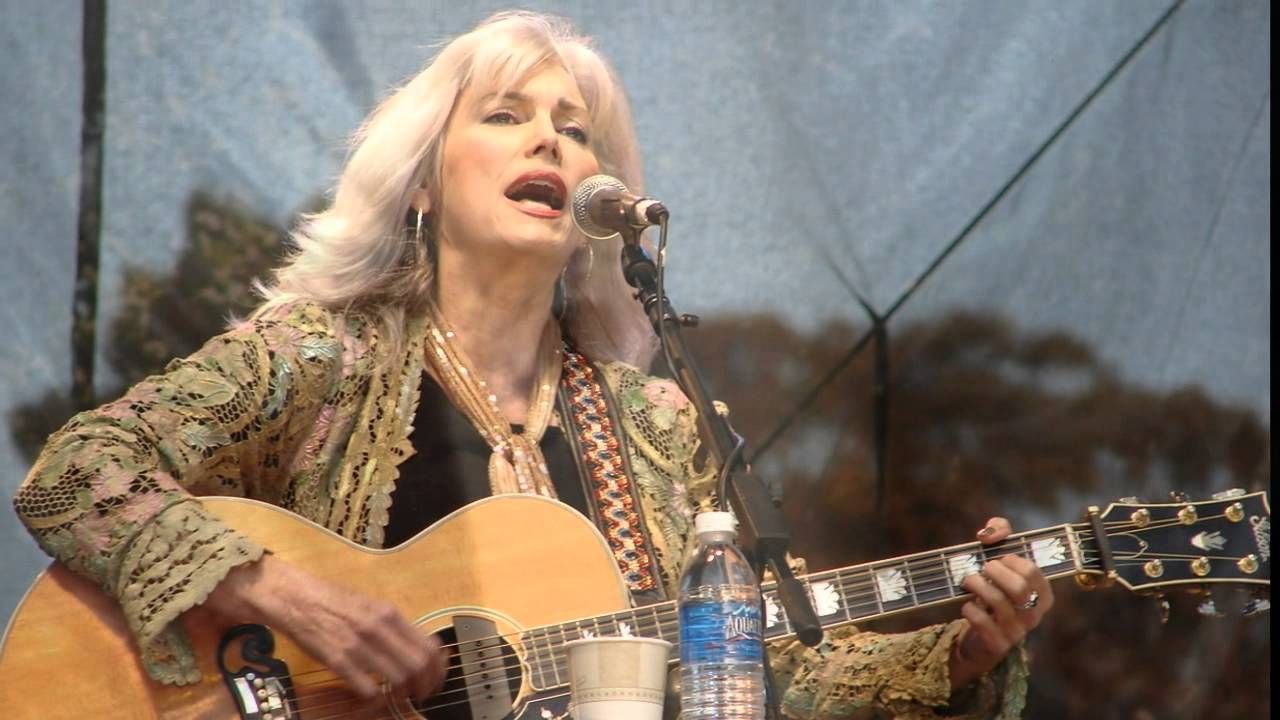
For many listeners, the defining Emmylou moment comes with her live recording: Emmylou Harris and the Nash Ramblers included “Calling My Children Home” on the Grammy-winning live album At the Ryman, released January 10, 1992, recorded April 30–May 2, 1991 at Nashville’s Ryman Auditorium. The album won the Grammy Award for Best Country Performance by a Duo or Group with Vocal (34th Grammy Awards), and it charted at No. 184 on the Billboard 200 and No. 32 on Billboard Top Country Albums. By commercial standards those are modest numbers; by cultural standards, this record was a beacon—one of those live albums that doesn’t just document a concert, but seems to restore a whole way of listening.
That’s what makes “Calling My Children Home” feel so powerful in her hands. Harris has always possessed a rare clarity—an ache that can be luminous without being theatrical. On this song, she doesn’t “interpret” so much as testify. The lyric’s central image is stark and tender: a parent calling children home, with “home” understood in the old gospel sense—not a street address, but the last safe place beyond suffering. The phrase is simple enough for anyone to understand, yet it carries generations of American grief and faith inside it. That’s why it lands whether you come to it as belief, metaphor, or memory. It is, at heart, a song about the moment when separation stops being negotiable—and the heart, refusing to be purely practical, answers with song.
The arrangement (especially in the live setting) is built to honor that message. Bluegrass-gospel doesn’t require grandeur; it requires closeness. The harmonies do the heavy lifting, and the rhythm feels like a human pulse rather than a studio grid. On At the Ryman, the Nash Ramblers’ acoustic instrumentation and ensemble singing turn the Ryman into what it once was at its best: a communal room where every voice in the crowd feels invited to join the chorus. In that atmosphere, “calling” becomes more than a lyric—it becomes something you can almost see: a hand raised, a name spoken softly, the air changing when people recognize a truth they’ve been carrying for years.
There’s another quiet chapter to the song’s Emmylou history, too: it appears in her later live repertoire as well—listed among the tracks on Spyboy (a live set associated with her late-’90s era), reinforcing that she didn’t leave this song behind as a one-album moment, but kept it close like a touchstone.
Ultimately, “Calling My Children Home” endures because it refuses to flatter the listener with easy comfort. It offers something more honest: the recognition that love doesn’t stop at the boundary of loss. Whether the “children” are literal, symbolic, or simply the beloved names we keep repeating inside ourselves, the song dares to imagine that the bond still has a voice—and that, somewhere beyond the noise of ordinary days, it might still be answered. In Emmylou’s world, that is not sentimental. It is sacred craft: three minutes of harmony, made sturdy enough to carry what we cannot put down.