 By Classic Oldies
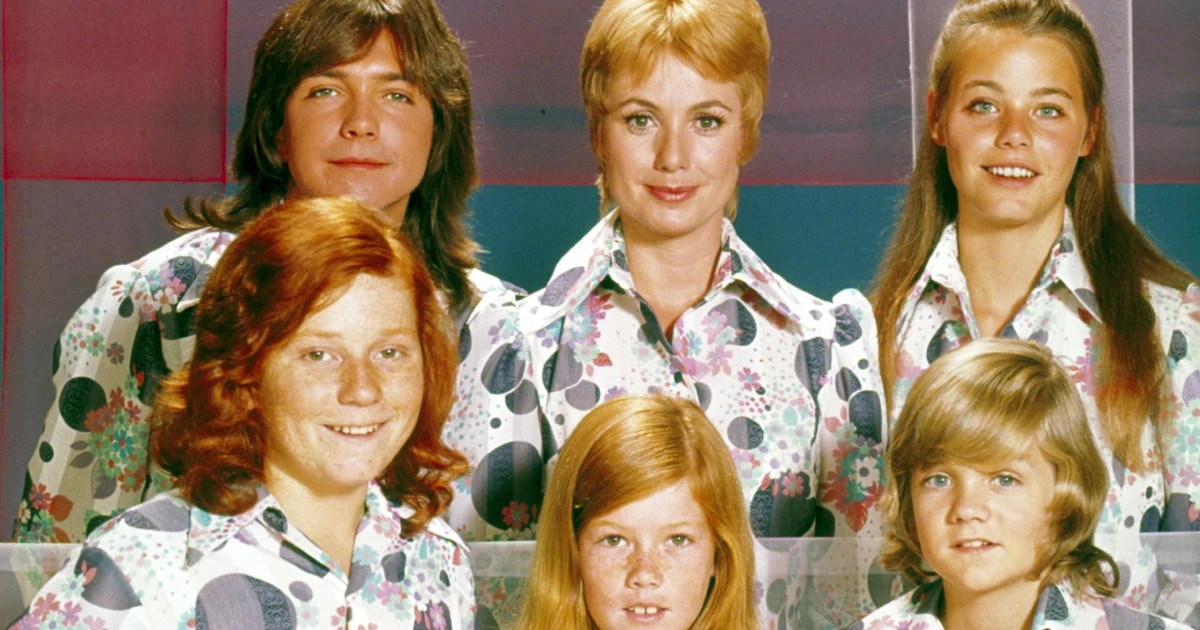
Storybook Love captures the softest emotional shade of The Partridge Family—not a major chart smash, but a deeply affectionate reminder of how gentle early-1970s pop could be when it wore its heart openly.
When people look back on The Partridge Family, the first memories usually arrive with the big singles: I Think I Love You, which reached No. 1 on the Billboard Hot 100 in 1970, Doesn’t Somebody Want to Be Wanted at No. 6 in 1971, and I’ll Meet You Halfway at No. 9 later that same year. Storybook Love belongs to a different corner of that legacy. It was not one of the group’s major charting Hot 100 singles, and that fact tells you something important right away: this is one of those songs remembered less as a commercial event than as an emotional keepsake. It lives in the quieter space where devotion often lasts longest.
That quieter space suits the song beautifully. Storybook Love is built around an old-fashioned romantic ideal, the kind of feeling pop music once embraced without apology. It does not strain for cleverness, and it does not hide behind irony. Instead, it leans into tenderness, fantasy, hope, and the fragile sweetness of believing that love can still feel pure. In that sense, the title says almost everything. A storybook romance is not merely love; it is love imagined as something glowing, protected, and a little larger than real life. That dream is exactly what the song preserves.
To understand why a song like this mattered, it helps to remember what The Partridge Family represented in popular culture. The television series arrived in 1970 and quickly became more than a sitcom. It became part of the emotional furniture of the era: a bright bus, a musical family, a sense of motion, and songs that seemed to drift in from a more hopeful room. The records themselves, of course, were crafted with the help of accomplished Los Angeles session musicians and shaped under producer Wes Farrell. The television image was family-friendly and breezy, but the records were often much stronger than critics were willing to admit at the time.
At the center of that sound was David Cassidy, whose voice carried youth, polish, and real yearning in equal measure. Whatever people thought they knew about the television phenomenon, the emotional credibility of many Partridge Family recordings came from how effectively Cassidy could sell a lyric. On a song like Storybook Love, that quality matters more than ever. He does not oversing it. He lets the melody breathe. The result is a performance that feels less like a production trick and more like a private promise set to music. Shirley Jones and the overall studio sheen help maintain the group’s signature warmth, but the emotional center rests in that unmistakably youthful lead voice.
The meaning of Storybook Love lies in its innocence, though innocence should never be mistaken for weakness. The song reflects a moment in pop when sincerity still had market value and emotional openness was not treated as something embarrassing. It imagines love as shelter, as wonder, as a place where everyday confusion can briefly give way to certainty. That is why the song still reaches people who return to it after many years. Life grows more complicated. Music changes. Trends harden. But a melody built on gentleness has a way of slipping past all of that and going straight back to memory.
There is also something especially moving about the fact that Storybook Love never became one of the group’s headline chart triumphs. The biggest hits are often attached to public memory, radio rotation, and commercial statistics. A song like this survives differently. It becomes personal. It belongs to listeners who found it beyond the obvious singles, who heard in it a softer truth about the group’s catalog. In some ways, that makes it more intimate than the songs everybody already agrees to remember.
And perhaps that is the hidden strength of The Partridge Family as a recording act. For all the bright colors, television familiarity, and teen-idol excitement surrounding the group, the catalog contained moments of genuine feeling. Storybook Love reminds us that the project was never only about bubblegum surfaces. Beneath the smiles and the broadcast charm was a very real understanding of what listeners wanted from a love song: comfort, melody, and a voice that sounded as though it believed every word.
Today, hearing Storybook Love can feel like opening a well-kept letter from another era. Not because it is grand or revolutionary, but because it is so unguarded. It belongs to a time when songs could still be tender without embarrassment, when longing could sound clean and bright, and when even a television-born pop group could deliver something surprisingly delicate. That is why the song still matters. It may not come with the chart history of I Think I Love You, but it carries another kind of legacy—the kind built from memory, affection, and the quiet endurance of a melody that never had to shout.
In the end, Storybook Love stands as one of those overlooked pieces that helps complete the emotional portrait of The Partridge Family. It shows that behind the famous hits was a gentler current running all along: romantic, wistful, and deeply tuned to the hopeful imagination of its time. And sometimes those are the songs that stay with us longest, precisely because they ask so little except that we listen with an open heart.