 By Classic Oldies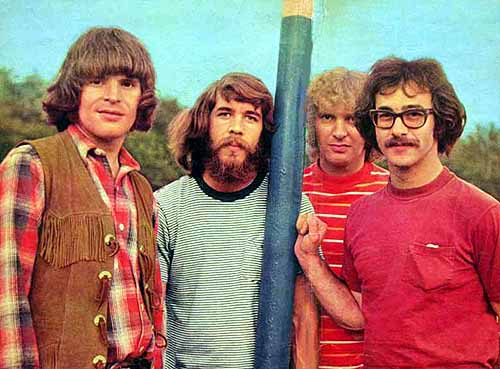
“Born on the Bayou” was never just a song about a place; in the hands of Creedence Clearwater Revival onstage, it became a living mood of heat, memory, and myth.
There are certain records that feel complete the moment they are pressed to vinyl, and then there are songs that seem to wait for the stage before revealing their full character. “Born on the Bayou” by Creedence Clearwater Revival belongs firmly to the second kind. First released in January 1969 as the opening track on Bayou Country, the group’s second studio album, it arrived at a decisive moment in the band’s rise. Bayou Country climbed to No. 7 on the Billboard 200, while “Born on the Bayou” was also issued as the B-side of “Proud Mary,” the single that reached No. 2 on the Billboard Hot 100. Even without being the headline A-side, the song quickly established itself as one of the most atmospheric and enduring pieces in the CCR catalog.
What made it remarkable from the beginning was the strange and beautiful contradiction at its center. John Fogerty, who wrote the song, was not raised in Louisiana or anywhere near a real bayou. He came from Northern California. Yet few songwriters in rock created such a convincing Southern landscape out of pure imagination, old records, radio memories, film images, and emotional instinct. That is part of the brilliance of “Born on the Bayou”: it is not journalism, not autobiography in the literal sense, but a kind of musical dream. It invents a homeland and then sings about it as though it had always existed.
The lyrics carry that dream with unusual force. “Now when I was just a little boy, standin’ to my daddy’s knee,” Fogerty sings, and at once the listener is dropped into memory. Then comes the unforgettable image of “chasin’ down a hoodoo there,” a line that sounds mysterious, half-superstitious, half-childhood adventure. The song is thick with humidity, July heat, dark water, and distant light. It feels like recollection, even if the memories are imagined. That is why so many listeners connected with it. The bayou in this song is not only a region. It is a private America of the mind, a place where childhood, danger, freedom, and longing all blur together.
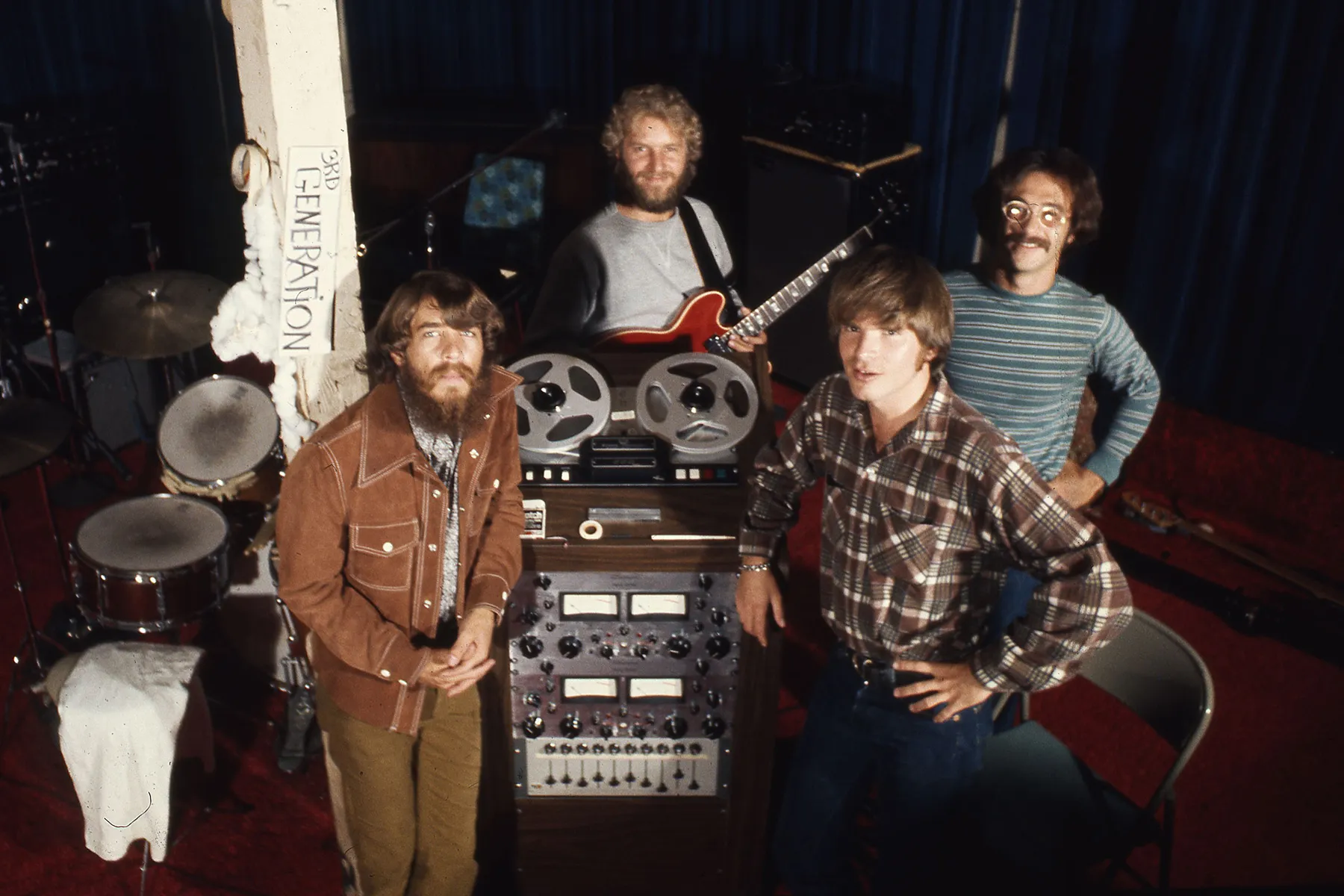
On the studio version, that mood was already powerful. The opening guitar figure sounds like a warning and an invitation at the same time. Doug Clifford’s drumming gives the track a slow, deliberate push, while Stu Cook’s bass keeps everything grounded in a deep, rolling pulse. Tom Fogerty adds texture and support without disturbing the spell. But live, the song often became even more gripping. Onstage, Creedence Clearwater Revival could stretch the atmosphere a little longer, lean more heavily into the riff, and let the groove breathe. The result was not showy in the usual rock sense. It was more primal than flashy. The live version did not decorate the song; it intensified it.
That was one of CCR’s great strengths as a performing band. They were not dependent on spectacle. They did not need elaborate staging to make a room feel transformed. With “Born on the Bayou”, they could create tension through tone, timing, and sheer conviction. Fogerty’s voice, already one of the most distinctive in American rock, sounded even more urgent in performance. There was grit in it, but also command. He did not merely sing the song; he drove it forward as if he were pushing through swamp fog with nothing but instinct and rhythm to guide him.
That live power can be heard especially clearly in concert recordings from the band’s peak era around 1969 and 1970. By then, “Born on the Bayou” had grown from a moody album opener into a formidable stage piece. Audiences did not simply hear it; they seemed to enter it. The live arrangement often felt heavier, darker, and more physical than the studio cut. The guitar lines had more bite, the beat carried more menace, and the spaces between phrases felt charged. It was swamp rock stripped to its essentials and made even more vivid by performance.
And that, perhaps, is the secret of the song’s lasting hold. “Born on the Bayou” captures something older than trend, and deeper than regional imitation. It speaks to the way music can create belonging where none existed before. Fogerty did not need to be literally born on a bayou to write about yearning for one. In fact, that distance may be part of what gave the song its haunting quality. It is about place, yes, but also about the places people carry inside themselves: the places they invent, remember, miss, or wish had shaped them.
There is also something deeply American in the song’s achievement. Creedence Clearwater Revival took blues, rockabilly, country feeling, rhythm and blues drive, and Southern imagery, then filtered all of it through a sharp California band with remarkable discipline. The result did not sound academic. It sounded lived-in. That is why “Born on the Bayou” never faded into novelty or regional costume. It remains convincing because it is emotionally true, even when it is geographically imagined.
In the end, the live performances only confirmed what the studio recording promised: this was one of CCR’s great world-building songs. Not grand in a progressive-rock sense, not ornate, not overloaded with explanation. Just a few indelible images, a swamp-thick groove, and a voice that sounded as though it had traveled through smoke and summer to reach the microphone. Many bands could play loud. Few could summon atmosphere the way Creedence Clearwater Revival did when “Born on the Bayou” began to roll.
And once that riff started, everything changed. The room felt closer, darker, somehow warmer. The song no longer belonged only to Bayou Country or to 1969. It belonged to that timeless place where memory and music meet, and where a live performance can make an imagined landscape feel more real than anything outside the door.