 By Classic Oldies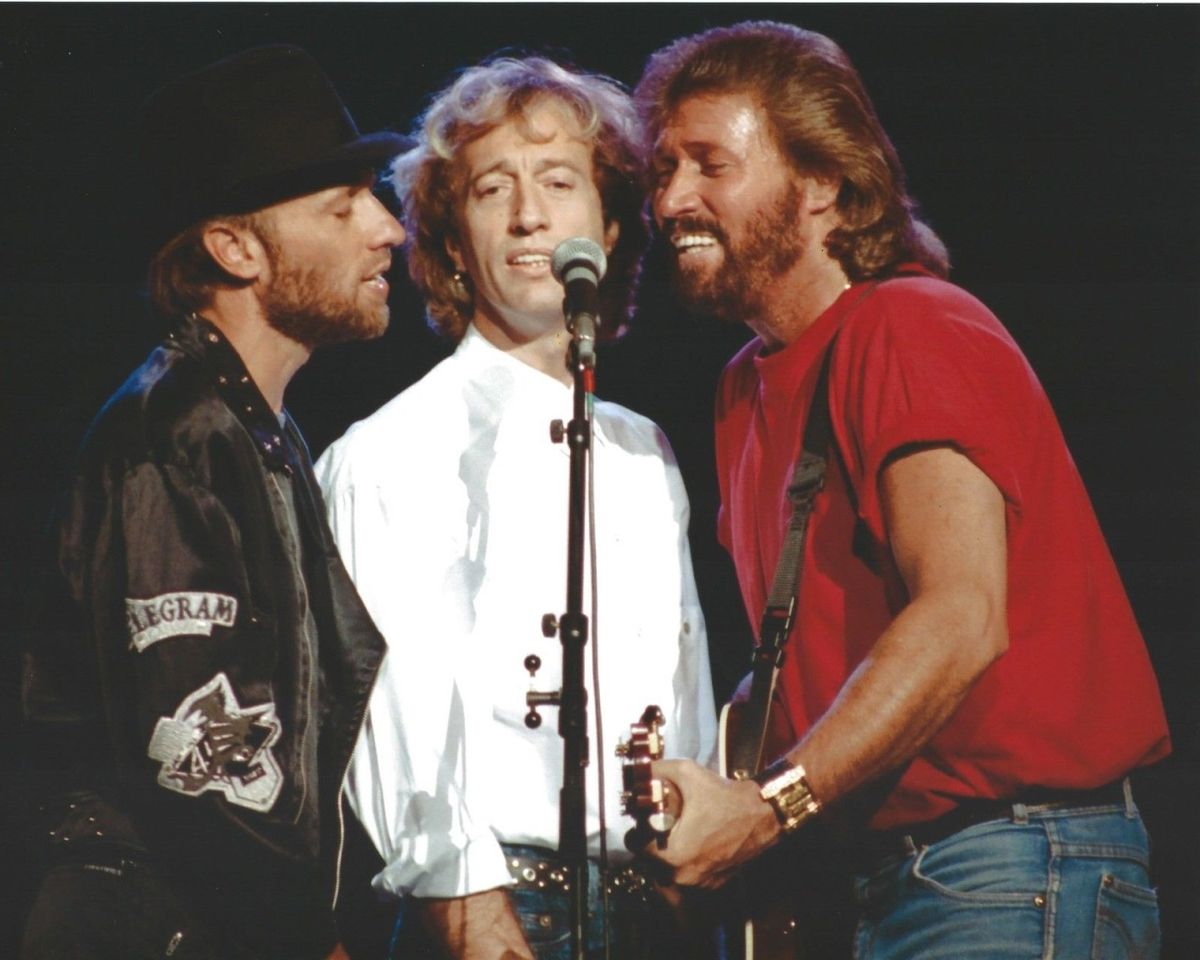

Never Say Never Again shows the Bee Gees in a quieter, more reflective mood, turning persistence into poetry and heartbreak into something almost dignified.
Not every Bee Gees song arrived with the force of Stayin’ Alive, How Deep Is Your Love, or Night Fever. Some came in more softly, asking not for instant applause but for a more patient kind of listening. Never Say Never Again belongs in that second category. In strict chart terms, it was not one of the group’s major international singles and did not become a notable standalone hit on the Billboard Hot 100 or the UK Singles Chart. Yet that very absence from the usual chart mythology is part of what makes the song so moving now. It feels less like a public triumph and more like a private conversation.
By the time listeners encounter a song like Never Say Never Again, they are hearing the work of a group that had already lived several musical lives. The story of the Bee Gees is often told through eras: the lush melancholy of the 1960s, the elegant pop craftsmanship of the early 1970s, the seismic reinvention of the disco years, and then the long afterglow in which the brothers kept writing, harmonizing, and proving that their gift ran deeper than fashion. That broader history matters here, because Never Say Never Again sounds like the work of artists who understood that survival in music is not merely about staying famous. It is about staying truthful.
What makes the song linger is its emotional posture. Even the title carries weight. Never Say Never Again is built around the old human temptation to shut the door for good after disappointment, and then the equally human discovery that life rarely honors such final statements. The phrase suggests caution, pride, wounded memory, and hope all at once. That is classic Bee Gees territory. Few songwriters were better than Barry Gibb, Robin Gibb, and Maurice Gibb at catching the moment when love has already bruised a person, yet some inner voice still refuses to surrender.
There is also a maturity in the way the song carries itself. This is not youthful romance presented in bright colors. It is more seasoned than that, more aware of reversals, more interested in emotional aftermath. The Bee Gees had always been masters of melody, but in lesser-known later songs, what stands out just as much is restraint. They no longer needed to prove they could write a giant hook. They could instead let a song breathe, trusting that a phrase, a chord change, or a turn in the harmony would do the deeper work. Never Say Never Again has that kind of emotional architecture. It does not push. It settles in.
The backstory of songs like this is often inseparable from the brothers’ larger career arc. The public tends to remember the Bee Gees as hitmakers on an almost unreal scale, and rightly so. But devoted listeners know their catalog is filled with songs that never became massive radio fixtures and yet reveal just as much about their artistry. That is where Never Say Never Again finds its true home. It stands as part of that undervalued side of the group: the side where craftsmanship, emotional intelligence, and lived experience matter more than chart fireworks.
Another reason the song resonates is that it reflects a recurring theme in the Bee Gees songbook: resilience without swagger. Their music often understands that strength is rarely loud. Sometimes strength is simply the willingness to feel again after promising yourself you would not. In that sense, Never Say Never Again is not only about romance. It can also be heard as a statement about endurance itself. For a group that weathered critical backlash, changing tastes, personal strain, and the burden of their own legend, that message lands with unusual force.
Listening now, one hears the beauty of perspective. The song does not beg to be rediscovered through novelty. It deserves to be rediscovered because it reveals something essential about the Bee Gees: beyond the era-defining hits, beyond the headlines, there was always a deep current of tenderness and wisdom in their writing. Never Say Never Again may not sit high in the official chart record, but it occupies a different kind of ranking, the one that forms quietly in the heart over time. And sometimes those are the songs that stay with us longest.
That is why this track feels so affecting today. It reminds us that the Bee Gees were never only a phenomenon. They were careful observers of the human condition, able to turn second chances, regret, and emotional caution into melody. In Never Say Never Again, they left behind not a stadium-sized statement, but something gentler and, in its own way, more lasting: a song that understands how difficult it is to begin again, and how necessary it can be.