 By Classic Oldies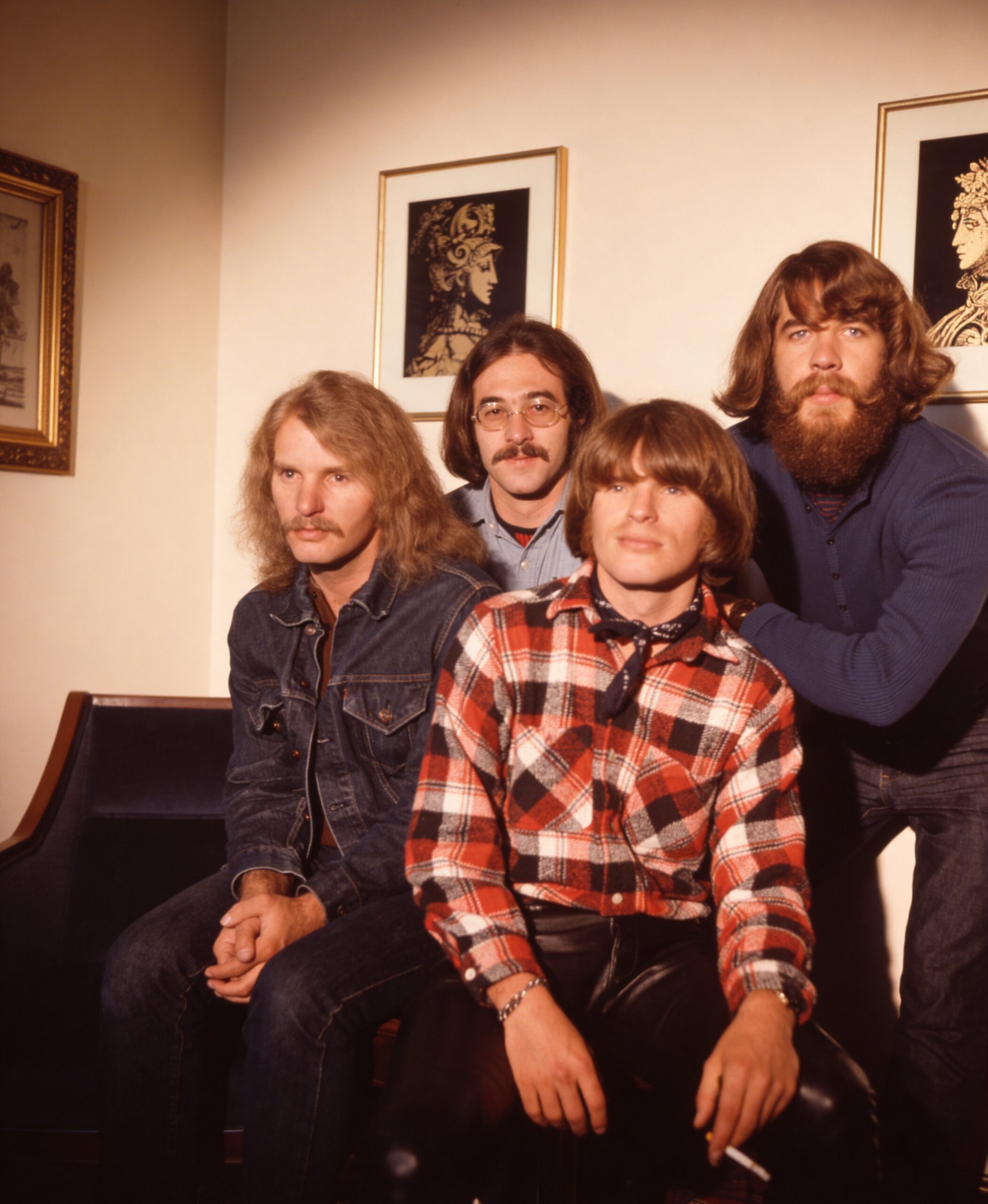
At Woodstock, Green River felt like a sudden rush of memory and motion, a song about summer freedom cutting through the mud, fatigue, and myth of 1969.
By the time Creedence Clearwater Revival reached the stage at the Woodstock Music & Art Fair in the early hours of August 17, 1969, the festival was already running late, the field was worn down, and much of the crowd had been stretched to its limit. Yet that setting now gives their performance of Green River an unusual kind of power. This was not a forgotten album track tossed into a famous night. Released in July 1969, Green River had already surged to No. 2 on the Billboard Hot 100, and the album Green River would soon reach No. 1 on the Billboard 200. In other words, CCR arrived at Woodstock not as hopeful newcomers, but as one of the hottest bands in America, carrying a song that was already becoming part of the country’s musical bloodstream.
And still, their Woodstock appearance remained strangely under-discussed for years. One reason is well known. John Fogerty was unhappy with the set and chose not to have it included in the original Woodstock film or soundtrack. He later spoke of the frustration of going on after a delayed schedule and looking out at a crowd that was drained, with many people no longer fully alert. That disappointment shaped the performance’s reputation for decades. But time has a way of correcting first impressions. Listening back now, especially to Green River, what stands out is not failure at all. It is focus. It is toughness. It is a band refusing to drift, even when the night around them seemed to sag under its own legend.
The story behind Green River only deepens that feeling. Although the title sounds mythical and southern, the song grew out of John Fogerty’s own memories of childhood. He has often said the imagery came from family trips to Putah Creek in Northern California, along with a remembered connection to Green River soda syrup from those years. That combination is part of the song’s brilliance. It feels at once specific and universal, like a private memory that somehow belongs to everybody. The lyrics are full of old roads, riverbanks, rope swings, dragonflies, and lazy summer heat. In just a few lines, Fogerty created a whole American landscape, not polished or glamorous, but lived in. That is why the song still hits so hard. It does not describe a fantasy of youth. It sounds like youth itself, already slipping into memory even as it is being sung.
That emotional undercurrent matters when you place the song inside Woodstock. Many performances from that weekend are remembered for excess, improvisation, or a kind of beautiful sprawl. Creedence Clearwater Revival brought something else. Their great gift was compression. They could suggest a whole world in less than three minutes and still leave you feeling you had traveled a long distance. At Woodstock, Green River came across leaner and more urgent than the studio cut. Doug Clifford and Stu Cook kept the groove tight and muscular, Tom Fogerty filled the edges, and John Fogerty pushed the song forward with that clipped, driving guitar style that became one of the signatures of late-1960s American rock. Nothing is wasted. Nothing wanders. In a festival famous for drifting, CCR sounded like a road map.
There is also something quietly moving about hearing such a vivid summer song played in that hour of the night. Green River is full of daylight images, but at Woodstock it arrived after midnight, in a field marked by mud, fatigue, and weather. That contrast gives the performance its lasting ache. The song remembers a simpler world of creek water, back roads, and half-forgotten pleasures, while the festival setting reminds us how quickly innocence turns into history. Perhaps that is why the performance feels richer now than it may have in the moment. It is not only a hit being played live. It is a song about memory meeting an event that would itself become memory almost instantly.
Musically, Green River also shows what made CCR so distinctive in 1969. They were often grouped with the era’s counterculture, but their sound stood apart. They did not depend on extended solos, ornate arrangements, or psychedelic fog. Instead, they drew from rockabilly, blues, country, swamp pop, and old-fashioned rock and roll economy. That made them both modern and strangely timeless. Green River is one of the clearest examples of this balance. The record feels contemporary to 1969, yet it also seems connected to older American sounds and older American places. At Woodstock, that identity came into sharp focus. While other acts expanded outward, CCR drove inward, straight to the center of the song.
It is worth remembering just how extraordinary that year was for the band. In 1969 alone, Creedence Clearwater Revival released Bayou Country, Green River, and Willy and the Poor Boys, a run of albums so strong that it still feels almost unreal. Green River stands at the heart of that streak. It carries the group’s gift for hooks, atmosphere, and emotional shorthand in one compact performance. At Woodstock, even with the late hour and the less-than-ideal circumstances, the song never loses its shape. If anything, the tension of the moment sharpens it.
Today, the Woodstock performance of Green River feels like a correction to the old story. It reminds us that Creedence Clearwater Revival were not merely hitmakers passing through a famous festival. They were one of the defining live bands of their time, and this song was one of their purest statements. Underneath the fatigue of the night, beneath the festival mythology, you can still hear the same thing that made the record unforgettable in the first place: the pull of place, the ache of memory, and the miracle of a band able to make the personal sound national. Green River at Woodstock is not just a performance from 1969. It is the sound of America remembering itself in real time.