 By Classic Oldies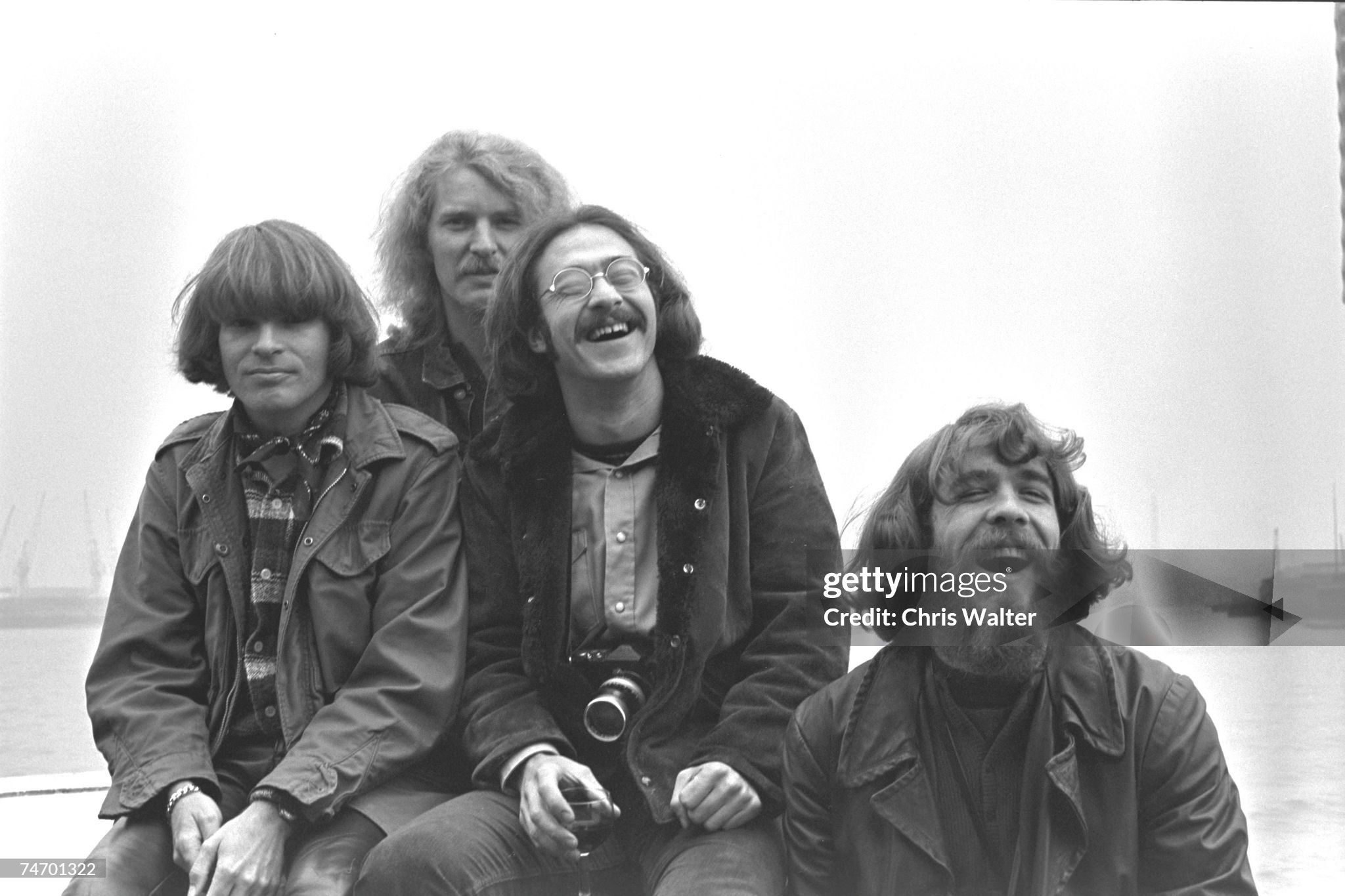
More than a cover, I Heard It Through the Grapevine became Creedence Clearwater Revival‘s slow-burning meditation on rumor, betrayal, and the lonely moment when bad news reaches the heart before the truth reaches the room.
By the time Creedence Clearwater Revival released their version of I Heard It Through the Grapevine on Cosmo’s Factory in the summer of 1970, the song was already part of American popular music history. Written by Norman Whitfield and Barrett Strong, it had first become a major hit for Gladys Knight & the Pips, whose 1967 recording reached No. 2 on the Billboard Hot 100 and No. 1 on the R&B chart. Then came Marvin Gaye‘s magnificent 1968 reading, which went all the way to No. 1 on both the Billboard Hot 100 and the R&B chart, turning the song into one of Motown’s defining achievements. That is what makes the CCR version so remarkable: they did not choose an obscure tune to revive. They chose a classic that already seemed untouchable.
And yet, instead of imitating Motown elegance, Creedence Clearwater Revival pulled the song into a different emotional landscape altogether. Their recording runs a little over 11 minutes, making it one of the longest and boldest tracks in the band’s catalog. It was not pushed as a major U.S. hit single in the same way as the album’s smash songs, so it did not post its own headline-making Hot 100 peak. But the parent album, Cosmo’s Factory, was a giant, spending nine weeks at No. 1 on the Billboard 200. In that setting, I Heard It Through the Grapevine became something just as powerful as a single: a centerpiece, a mood piece, a long shadow stretching across one of the strongest albums of the era.
What listeners heard was not polished urban soul, but a tense and hypnotic swamp-rock trance. John Fogerty sings as if each line has been dragged through gravel and midnight air. The rhythm section of Stu Cook and Doug Clifford does not hurry the pain; it circles it, patiently, almost mercilessly. Tom Fogerty helps hold the structure in place while the groove keeps tightening like a knot. The brilliance of the arrangement lies in its restraint. Even at that length, the performance never feels indulgent. It feels watchful, suspicious, and deeply human, as though the band understands that the real wound in the song is not simply heartbreak, but the humiliation of hearing your own story secondhand.
That, of course, is the genius of the lyric itself. I Heard It Through the Grapevine is a song about information arriving in the cruelest possible way. The lover has not been told directly. Instead, the truth travels through whispers, side conversations, and the social current people cannot control. There is shame in that, and helplessness too. In the Marvin Gaye version, the pain is silky, wounded, and devastating. In the hands of CCR, the same words become more rugged and ominous. The song sounds less like a confession and more like a man walking under a dark sky, replaying every rumor until it hardens into fact.
There is also something revealing about where this track sits in the story of Creedence Clearwater Revival. In 1970, the band was at a commercial peak, but the pressure inside the group was growing. John Fogerty‘s leadership had helped create an astonishing run of hits, yet the atmosphere around CCR was becoming more strained. That tension is not spelled out in the recording, but one can hear a band that knows how to channel pressure into discipline. The performance feels expansive, yet it never loses its grip. It has the atmosphere of a late-night jam, but with the focus of musicians who know exactly where the emotional center lies.
Another reason this recording lasts is that it reveals a side of CCR casual listeners sometimes forget. The group is often remembered for economical singles, sharp hooks, and compact rock songs that wasted nothing. But I Heard It Through the Grapevine shows they could also stretch out when the material demanded it. They did not turn long form into self-congratulation. They used repetition the way a great novelist uses silence: to deepen tension, to let the feeling settle, to force the listener to stay in the room with it.
For many fans, this is one of the greatest cover versions in classic rock, precisely because it refuses to compete with the original on the original’s terms. It does not try to out-sing Marvin Gaye or out-Motown Motown. Instead, it asks a different question: what happens if you take this story of whispered betrayal and place it in a leaner, rougher, more haunted musical world? The answer is the CCR version, and it still sounds alive because its emotion is so recognizably true. Bad news rarely arrives with ceremony. Most of the time, it reaches us like this song does: indirectly, repeatedly, and with a dread that grows heavier each minute.
That is why Creedence Clearwater Revival’s I Heard It Through the Grapevine continues to resonate. It is not merely a long album track from a famous band. It is a transformation of a well-known song into a different kind of ache. On Cosmo’s Factory, surrounded by hit records and radio staples, it stands apart like a dark river at night, moving slowly, carrying secrets, and reminding us that some songs do not need to shout to leave a mark. They just need the right voice, the right groove, and the courage to linger where it hurts.