 By Classic Oldies
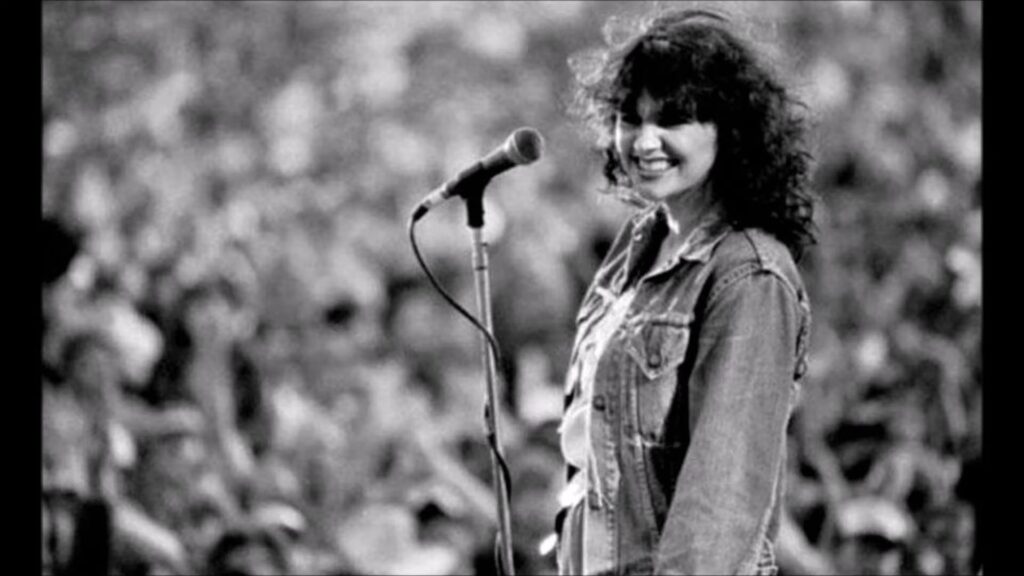
“Silver Threads and Golden Needles” is a clear-eyed goodbye to a love that money can decorate but never repair—a small country proverb sung like a private letter you finally dare to mail.
When Linda Ronstadt released “Silver Threads and Golden Needles” as a single from Don’t Cry Now, it didn’t arrive with the thunder of her later blockbuster hits—but it arrived with something just as lasting: definition. On the Billboard Hot 100, the song first appeared on the chart dated April 6, 1974 at No. 98, and it ultimately peaked at No. 67. More importantly for the story of who Ronstadt was becoming, it rose to No. 20 on Billboard’s country chart, widely noted as her first country chart hit—a modest number that nonetheless opened a very big door.
That timing matters because the single was a flag planted at the start of her Asylum Records era. Don’t Cry Now was released October 1, 1973, her first album for Asylum and the first to feature Peter Asher in the producer’s chair (alongside John David Souther and John Boylan), a partnership that would shape much of her most beloved work. The song itself—credited to writers Dick Reynolds and Jack Rhodes—was already a seasoned traveler: it had been first recorded by Wanda Jackson in 1956, long before “country-rock” had a name. Ronstadt understood that kind of material. She didn’t treat older songs like museum pieces; she treated them like living things that could breathe differently in a new room.
And she did give it a second life—literally. Ronstadt recorded two versions across her early catalog: first as a pure country performance on her 1969 solo debut Hand Sown… Home Grown, then again as a more country-rock crossover cut for Don’t Cry Now, the one chosen for the 1974 single push and the one that carried her onto the country chart for the first time. That decision tells you what was happening inside her artistry in the early ’70s: she wasn’t abandoning country roots—she was bringing them forward, letting them sit beside rock rhythm and pop clarity without apologizing to any side.
The song’s secret weapon is its central image. “Silver threads” and “golden needles” sound like something precious—almost bridal, almost celebratory—yet the lyric turns the shine into a warning: no amount of beautiful stitching can mend what’s been torn at the seam. It’s a heartbreak song that refuses melodrama. There are no grand vows, no stormy metaphors. Instead, there’s the quiet humiliation of realizing that someone can move on—perhaps even marry well, dress well, live well—while you’re left holding the unglamorous truth: the heart doesn’t obey new jewelry.
In Ronstadt’s hands, that truth becomes sharper, not softer. She sings with the kind of control that makes the ache feel earned. The performance doesn’t beg; it states. That’s why the line lands like a proverb passed down through kitchens and long drives: it’s not only about one lover leaving—it’s about the limits of replacement. People try to patch over loss with distraction, with status, with the next bright thing. But the song insists—gently, stubbornly—that some wounds don’t respond to glitter. They respond only to time, and sometimes not even that.
There’s also a larger meaning in how the record sat in 1974: Ronstadt at the threshold, before the pop peak, when the map was still being drawn. A Hot 100 debut at No. 98 might look small on paper, but it captures a real moment—one where her name was steadily becoming familiar across formats. And that country No. 20 matters because it wasn’t merely a chart stat; it was proof of credibility. It said: she can sing these songs not as costumes, not as clever detours, but as something true.
So “Silver Threads and Golden Needles” endures as more than an early entry in a towering discography. It’s a small, bright stitch in the fabric of her story: Linda Ronstadt choosing honesty over ornament, tradition over trend, and a simple lyrical lesson over theatrical heartbreak. The shine is there—silver, gold—but the point is what the shine cannot do. And once you hear that, you don’t forget it.