 By Classic Oldies
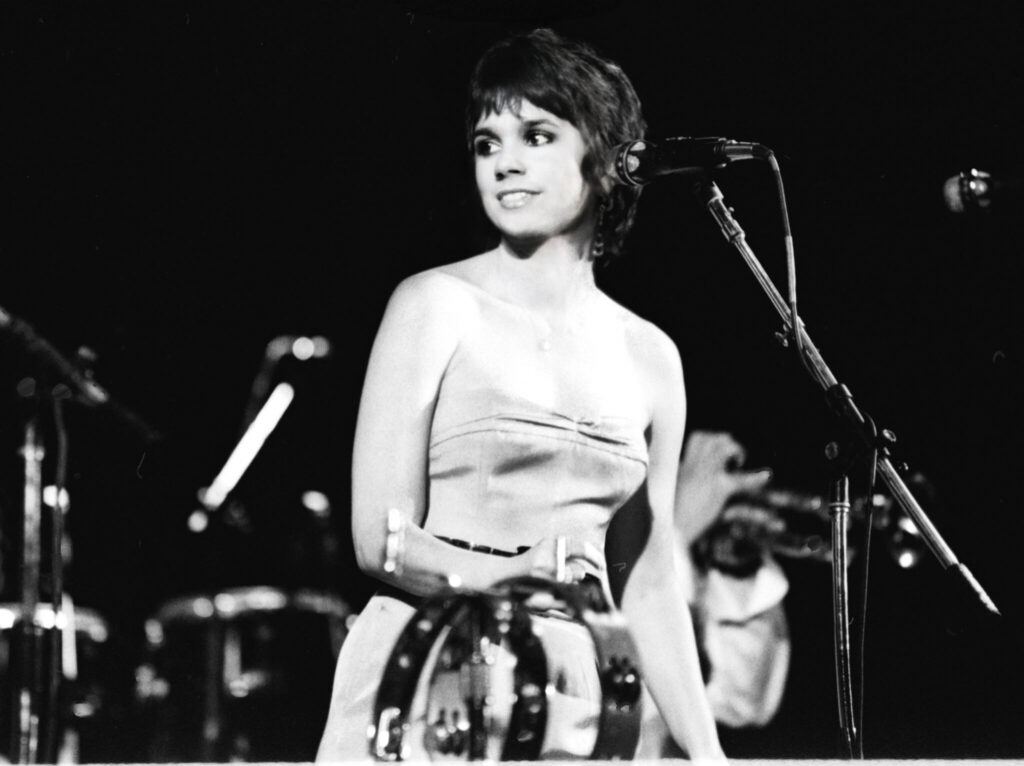
“The Tracks of My Tears” is the art of smiling while sorrow betrays you—a song that understands how dignity can be a mask, and how the mask still lets the truth seep through.
Linda Ronstadt didn’t choose “The Tracks of My Tears” because it was fashionable—she chose it because it was perfectly human. Her version, issued as the second single from Prisoner in Disguise and produced by Peter Asher, took a Motown classic and carried it into the mid-’70s with a kind of polished tenderness that still feels lived-in. On the U.S. Billboard Hot 100, the single’s first footprint was a debut at No. 83 (Billboard lists its debut details alongside later chart weeks), and it ultimately climbed to a peak of No. 25—a quietly strong showing for a cover of a song already beloved in another voice. Billboard’s chart data also ties the run to a debut chart date of 11/15/75, the moment it officially began its slow, steady rise. Beyond pop, it found its natural “adult” home too, reaching No. 4 on Adult Contemporary; and on country radio it traveled as a double-sided story, hitting No. 11 in tandem with its B-side, the Emmylou Harris duet “The Sweetest Gift.” In the UK, it became Ronstadt’s first Top 40 single, peaking at No. 42, with an Official Charts “first chart date” of 08/05/1976.
Those numbers matter—but what matters more is why this record works.
When Ronstadt sings the opening lines, she doesn’t “act” devastated. She does something braver: she sounds composed. That’s the genius of the song, and the cruelty of it. The narrator is skilled at seeming fine—skilled enough that strangers buy the performance—while the face is quietly giving everything away. Ronstadt understood that emotional contradiction instinctively; it’s the same gift that made her the era’s great interpreter. On Prisoner in Disguise—released September 15, 1975, recorded at The Sound Factory in Los Angeles, and produced by Peter Asher—she was already practicing a kind of musical empathy, moving between rock, country, and pop without ever losing the thread of feeling. The album itself reached No. 4 on the Billboard 200, proof that her audience trusted her taste as much as they trusted her voice.
And taste is exactly what this cover reveals: Ronstadt wasn’t borrowing Motown for nostalgia; she was borrowing it for truth.
To hear the full meaning of her performance, you have to remember the song’s original wound. Smokey Robinson & the Miracles released “The Tracks of My Tears” as a single on June 23, 1965, on Motown’s Tamla label—written by William “Smokey” Robinson, Warren “Pete” Moore, and Marvin Tarplin. The Miracles’ version reached No. 16 on the Billboard Hot 100 and No. 2 on the Billboard R&B chart, a remarkable balance of pop reach and soul authority. It’s a song built on one of the most piercing images in all of popular music: tears that leave evidence—literal “tracks”—even when the voice insists everything is under control.
Ronstadt doesn’t try to out-soul Smokey. She doesn’t need to. Instead, she shifts the lighting. Her reading is smoother, more open-throated, and just slightly more “public”—as if the narrator has gotten better at surviving in daylight, better at standing upright in the middle of ordinary life. But the ache is still there, and in some ways it’s sharper because it’s so well managed. That’s what adulthood does to heartbreak: it teaches you how to show up anyway. You go to work, you return phone calls, you laugh at the right moments—and all the while, some small part of you is watching the mirror for proof that you’re not fooling anyone.
There’s also a quiet historical poetry in the timing. In 1975, Ronstadt was riding the wave of Heart Like a Wheel and stepping fully into the role of a star who could make other people’s songs feel autobiographical. Choosing “The Tracks of My Tears” was, in a way, choosing a lineage: aligning herself with the emotional craftsmanship of Motown writing, where feelings are not vague atmospheres but clear sentences that cut cleanly. And because her version became a genuine hit—debuting at No. 83, peaking at No. 25, and crossing formats—it proved that this kind of emotional honesty still had room on the radio.
In the end, Linda Ronstadt doesn’t merely cover “The Tracks of My Tears.” She inhabits it—like someone reopening an old letter, not to suffer again, but to remember that the heart once felt that deeply, and survived. The song’s message is simple and merciless: you can hide sadness from a crowd, but not from time. Time always sees the tracks.