 By Classic Oldies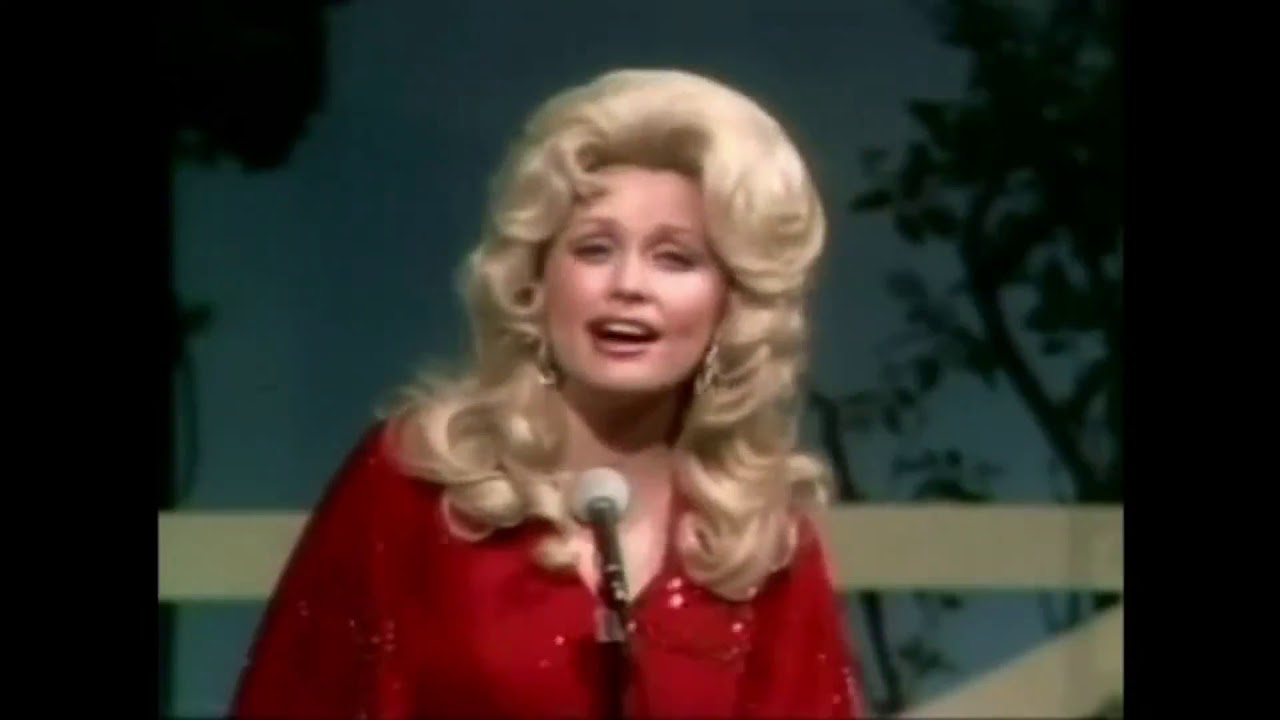
“I Will Always Love You” is not a goodbye fueled by heartbreak—it is love strong enough to let go, spoken with grace rather than regret.
When Dolly Parton wrote “I Will Always Love You,” she was not trying to craft a timeless ballad. She was trying to tell the truth—cleanly, kindly, and without bitterness. That honesty is why the song has outlived decades, genres, and interpretations. It is not a song about clinging. It is a song about release, and that distinction is everything.
The essential facts belong at the beginning. Dolly Parton wrote and first recorded “I Will Always Love You” in 1973, releasing it as a single in June 1974. The song topped the Billboard Hot Country Songs chart at No. 1, becoming one of her signature achievements as both songwriter and performer. It would do so again in 1982, when she re-recorded it for the film The Best Little Whorehouse in Texas—making her one of the very few artists to take the same song to No. 1 twice in different decades.
But chart success is not the heart of this song. The heart lies in why it was written.
Dolly Parton wrote “I Will Always Love You” as a farewell to Porter Wagoner, her longtime mentor, duet partner, and television collaborator. Their professional relationship had brought her fame—but it had also grown strained, complicated by control, expectation, and the painful difficulty of separating gratitude from independence. When Dolly decided to leave his show and pursue her own path, words failed them both. So she did what she always did when life became unsayable: she wrote a song.
What makes this story extraordinary is its tone. She did not write an accusation. She did not write a defense. She wrote a blessing.
“If I should stay, I would only be in your way.”
That line alone carries more emotional maturity than many entire albums. It acknowledges love and conflict at the same time. It understands that staying can sometimes do more harm than leaving—and that loving someone does not always mean remaining beside them.
Musically, Dolly’s original recording is understated, almost bare. There is no orchestral sweep, no theatrical build. Her voice is gentle, controlled, and unadorned—closer to a conversation than a performance. She sings as someone who has already cried and arrived at clarity. That restraint is crucial. The song would lose its power if it begged. Instead, it stands quietly, certain of its meaning.
Lyrically, “I Will Always Love You” is often misunderstood as romantic heartbreak. In truth, it is broader and deeper than romance. It speaks to any meaningful parting—mentor and student, friends whose paths diverge, lovers who recognize that love alone is no longer enough to keep them whole. The song does not deny pain, but it refuses to let pain define the goodbye.
There is also a remarkable detail often overlooked: when Elvis Presley expressed interest in recording the song in the mid-1970s, his management requested half the publishing rights. Dolly Parton declined—politely but firmly. It was one of the most financially risky decisions of her career at the time. Yet she has often said it was one of the proudest, because the song was too personal to give away ownership. That choice would later prove pivotal, but more importantly, it revealed how deeply she understood the song’s identity. This was not just a hit. It was her truth.
When Dolly re-recorded “I Will Always Love You” in 1982, the meaning subtly shifted. The second version feels more reflective, less raw—like a memory revisited rather than a wound still open. Yet it retained its emotional integrity, proving the song’s resilience. It could grow older without losing its center.
Over time, other interpretations would bring the song global attention, but Dolly Parton’s original remains the emotional blueprint. Hers is the version where the silence matters. Where the pauses speak. Where love is not dramatic, but deliberate.
What gives “I Will Always Love You” its enduring weight is its moral clarity. It tells us something difficult and rare: that love does not require possession, that gratitude can exist alongside separation, and that the kindest goodbyes are not the loudest ones. It is a song that refuses bitterness even when bitterness would be justified.
In the larger arc of Dolly Parton’s songwriting, this track stands as a quiet thesis statement. She has always written with empathy, with humor, with wisdom that doesn’t need to announce itself. Here, she distilled all of that into one simple promise—not to stay, not to return, not to fix what cannot be fixed—but to remember with love.
In the end, “I Will Always Love You” is not about ending a relationship. It is about honoring it—even as you walk away. And in Dolly Parton’s voice, that act of grace feels not only believable, but profoundly human.