 By Classic Oldies
“Islands in the Stream” is love without defenses—two voices meeting in open water, trusting that together they won’t drift apart.
When Kenny Rogers and Dolly Parton sing “Islands in the Stream,” the song doesn’t sound like a duet assembled by strategy. It sounds inevitable. Two artists with entirely different textures—Kenny’s weathered calm and Dolly’s crystalline warmth—find a shared emotional temperature and stay there, unforced. The result is one of popular music’s rarest achievements: a love song that feels both intimate and universal, tender without fragility, confident without swagger.
The facts tell one kind of story, and they deserve to be heard first. “Islands in the Stream” was released in August 1983 as the second single from Kenny Rogers’ album Eyes That See in the Dark. Written by Barry, Robin, and Maurice Gibb—the Bee Gees at the height of their melodic powers—the song was produced by Barry Gibb with Albhy Galuten and Karl Richardson. It reached No. 1 on the Billboard Hot 100, No. 1 on Hot Country Songs, and No. 1 on the Adult Contemporary chart, a triple crown that quietly confirmed what listeners already felt: this song belonged everywhere.
What makes the behind-the-scenes story especially telling is what the song wasn’t meant to be. The Bee Gees initially wrote it with Marvin Gaye in mind, imagining a soulful R&B delivery. When Barry Gibb brought it into Kenny Rogers’ orbit, the song changed character—not by force, but by adaptation. And when Dolly Parton joined, it completed itself. Sometimes a song waits for the right voices; sometimes it reveals them.
Lyrically, “Islands in the Stream” is deceptively simple. There is no plot, no conflict, no dramatic turn. The song’s strength lies in its metaphor: two people standing apart in a restless world, choosing connection as shelter. “Sail away with me to another world,” they sing—not to escape responsibility, but to create a private space where honesty is possible. It’s love described not as passion or rescue, but as mutual steadiness.
That emotional clarity is why the song feels timeless. There’s no era-specific slang, no fashionable cynicism. It doesn’t argue its case. It assumes love can be calm and lasting, and invites you to believe it too. In a musical landscape often driven by drama, that assumption feels quietly radical.
The magic, of course, lives in the voices. Kenny Rogers sings with a grounded assurance—he sounds like someone who has known storms and understands what it means to choose harbor. Dolly Parton answers with light and lift, her phrasing full of grace, never overpowering, always present. Neither competes. Neither dominates. They listen to each other, and the listener can hear that listening. Their chemistry—so evident here—would later define other collaborations, but “Islands in the Stream” remains the purest expression of it.
There is also a subtle generosity in the performance. The song doesn’t spotlight virtuosity. It spotlights balance. Each voice gives the other room, and in that space, trust becomes audible. This is not a duet about fireworks; it’s a duet about staying.
Culturally, the song bridged worlds at a time when genre lines still mattered. Country and pop didn’t always share charts or audiences, yet “Islands in the Stream” moved effortlessly between them. It didn’t dilute either tradition; it honored both. That crossover success wasn’t a gimmick—it was a reflection of how honest emotion travels farther than labels.
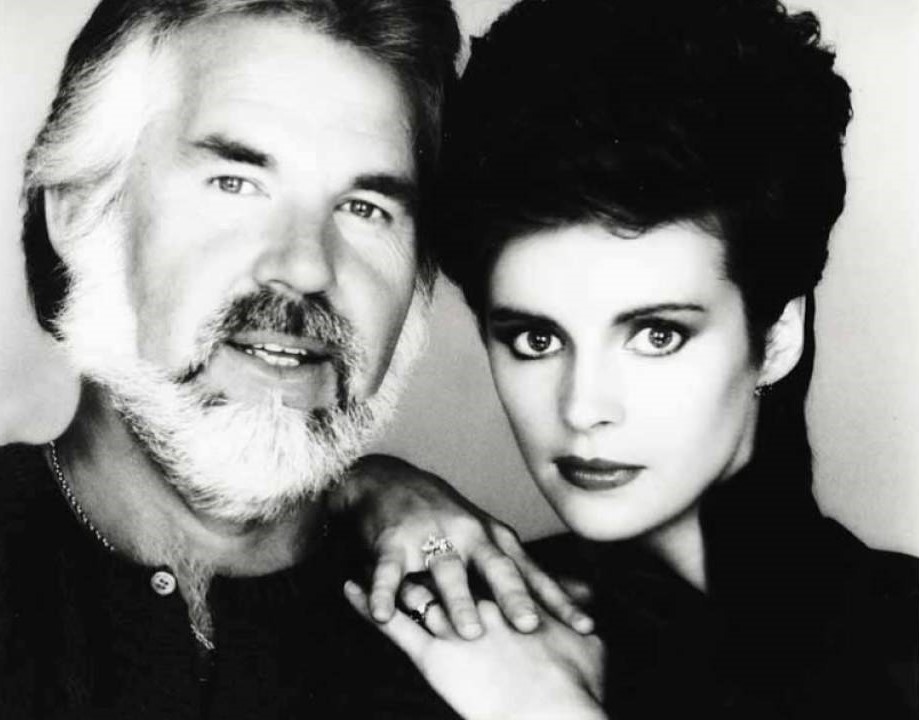
Over the years, the song has become inseparable from the image of Kenny and Dolly together—two icons whose friendship and mutual respect were never in doubt. But even if you strip away the history, the song holds. Played quietly, late in the evening, it still feels like a promise spoken directly to the listener: that partnership can be gentle, that love doesn’t have to shout to be strong.
In the end, “Islands in the Stream” endures because it believes in something many songs are afraid to say plainly—that two people, choosing each other again and again, can be enough. Not a fantasy. Not a miracle. Just a steady truth, carried by two voices who knew exactly how to let it breathe.