 By Classic Oldies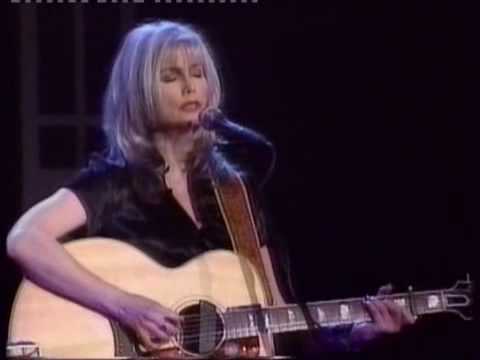
“Bang the Drum Slowly” is grief given a steady tempo—an elegy that doesn’t dramatize loss, but walks beside it, step by step, until you can breathe again.
“Bang the Drum Slowly” arrived in 2000 as one of those songs that feels less “released” than revealed. It appears on Red Dirt Girl, the turning-point album where Emmylou Harris stepped decisively into her own writing voice—eleven of the twelve tracks are written or co-written by her. The record came out on September 12, 2000, on Nonesuch Records, produced by Malcolm Burn.
But if you want the true headline, it’s this: “Bang the Drum Slowly” was written with Guy Clark as an elegy for Harris’s father. That single fact changes how everything in the song lands. Because it isn’t grief in the abstract. It’s grief with a name behind it, a chair left empty, a conversation that can’t be finished. On the album’s own track listing, the song is explicitly credited to Emmylou Harris / Guy Clark, lasting 4:51—long enough to feel like a vigil, short enough to resemble the way we actually mourn: in sudden waves, in brief silences, in thoughts that arrive without warning.
Commercially, the song itself didn’t have a conventional “debut and peak” on the singles charts—because it wasn’t positioned as a radio A-side meant to compete week to week. Instead, its public footprint is carried by the album that holds it. Red Dirt Girl peaked at No. 3 on Billboard’s country album chart and won the Grammy Award for Best Contemporary Folk Album (for the 2001 Grammy year). That’s a different kind of success story—one built not on a catchy hook conquering the moment, but on a body of work quietly proving it will endure.
And endure is exactly what “Bang the Drum Slowly” seems to be about.
The lyric reads like a list of all the questions we “meant to ask,” the ordinary details we assume we’ll get around to—until time closes the door. The title phrase itself is devastating in its restraint. A drum is usually for marching, for celebration, for calling attention. Here, the drum becomes ceremonial—slowed down into a kind of funeral cadence, as if the song is trying to make the moment last long enough for the heart to accept what the mind already knows.
What makes Harris’s performance so powerful is what she refuses to do. She doesn’t oversing it. She doesn’t lean on grand theatrical sorrow. The emotion is steadier—almost disciplined—like someone who understands that the truest grief often shows up not as a wail, but as a calm voice that can barely keep itself from breaking. The arrangement reinforces that feeling: piano and atmospheric textures that don’t distract, they hover; the rhythm doesn’t “drive,” it accompanies—like a friend walking beside you on a long block where you don’t want to be alone.
There’s another layer, too, tucked inside the album’s broader identity. Red Dirt Girl is often described as a major departure for Harris—less interpreter, more author; less traditional Nashville polish, more lived-in, modern Americana atmosphere. In that context, “Bang the Drum Slowly” feels like the emotional center of gravity: the place where craft and confession meet. It’s not just a sad song on an introspective album. It’s the song that explains why the album needed to exist—why, after decades of singing other people’s truths so brilliantly, Harris had reached the point where her own truth demanded a melody.
If you listen to it as an older heart listens—patiently, without rushing the ending—you realize the song’s real gift isn’t despair. It’s permission. Permission to remember the unfinished questions. Permission to miss someone without turning that missing into spectacle. And permission, finally, to honor a life not with noise, but with a slow, steady beat that says: you mattered—so much that we will not hurry past your absence.