 By Classic Oldies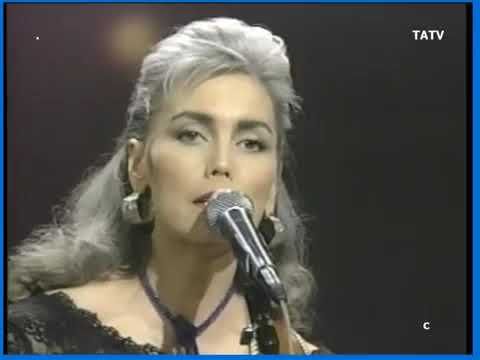
“Wheels” turns motion into a confession—Emmylou Harris singing about the ways we run, the ways we hide, and the strange loneliness of always having somewhere else to go.
The first thing to know—because it changes how you hear every line—is that “Wheels” is a Gram Parsons / Chris Hillman song, first released by The Flying Burrito Brothers on their 1969 debut The Gilded Palace of Sin. Emmylou’s recording arrived six years later on Elite Hotel (released December 29, 1975), where it appears as the album’s closing track, featuring Jonathan Edwards alongside her. And the setting matters: Elite Hotel became a career-defining high point—Harris’ first No. 1 on Billboard’s country albums chart and a rare crossover success for music that still smelled of honky-tonk, highway dust, and heartbreak.
That’s the factual spine. Now the ache inside it.
“Wheels” is one of those songs that sounds simple until you realize it’s talking about almost everything—freedom, avoidance, communication, distance, the modern curse of being able to leave at any moment. The lyric famously opens with a truth that feels both liberating and sad: we’ve all got wheels to take ourselves away; we’ve got the telephones to say what we can’t say… It’s the kind of writing Parsons and Hillman did so well: plain language that lands like a moral punchline, because it describes real life without romance or blame. No villains—just habits.
When Emmylou Harris sings it in 1975, she doesn’t make it dramatic. She makes it inevitable. Her voice in that era could be bright as glass, but it carried a steadiness underneath—an adult steadiness, the kind that doesn’t need to raise its voice to tell you the truth. On Elite Hotel, she’s already balancing two worlds at once: country tradition and rock-era songwriting, sacred feeling and secular detail. And “Wheels” is where those worlds meet perfectly—because it’s a country song about leaving, but it’s also a modern song about the tools that make leaving so easy.
The presence of Jonathan Edwards is a subtle stroke of genius. The duet quality doesn’t turn it into a romance narrative; it turns it into something more human and communal, as if two people are admitting the same weakness from different corners of the room. Together, their voices make the song feel less like accusation and more like recognition: yes, we’ve all done this—left too quickly, called instead of talking, pretended movement was the same as growth.
And that line—higher and higher every day—is where the song’s meaning quietly deepens. “Higher” can sound like progress when you’re young: bigger plans, faster roads, brighter rooms. But Emmylou sings it as if “higher” might also mean farther—farther from home, farther from repair, farther from the simple honesty of staying put and saying what you mean. It’s not anti-freedom. It’s anti-illusion. It suggests that motion can become a way of not facing yourself.
Placed as the final track on Elite Hotel, “Wheels” feels like the last look in the rearview mirror before the album disappears down the road. After all the heartache, the standards, the haunted beauty that comes before it, this closing song doesn’t resolve anything neatly. It simply admits the condition of modern living: we can always go. We can always call. We can always rise “higher.” And yet the heart still asks for something slower—something that doesn’t run away from its own truth.
That’s why “Wheels” lasts. It isn’t only about cars and highways. It’s about the human reflex to escape discomfort—and the quiet longing to stop escaping. In Emmylou Harris’ hands, a late-’60s country-rock meditation becomes a mid-’70s masterpiece of restraint: a song that doesn’t beg you to feel, but somehow leaves you feeling anyway—like dusk settling on a long drive, when you finally admit you don’t even remember what you were running from.