 By Classic Oldies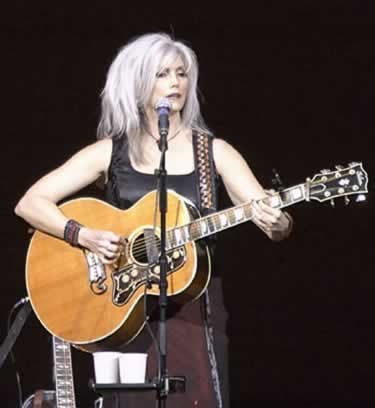
“Tougher Than the Rest” becomes, in Emmylou Harris’ voice, a quiet promise for the bruised-hearted—love offered not as rescue, but as steadfast companionship when life has already taken its swings.
Emmylou Harris recorded “Tougher Than the Rest” for her album Brand New Dance, released October 16, 1990, a record produced by Richard Bennett and Allen Reynolds that leaned into an eclectic set of covers rather than chasing radio formulas. On that album, “Tougher Than the Rest” sits proudly at track 2, running just under five minutes. It wasn’t rolled out as a hit single, and in fact Brand New Dance became notable for yielding no Top 40 country singles, a sign of how the ground beneath mainstream country was shifting at the dawn of the ’90s. On the charts, the album’s documented peak was No. 45 on Billboard’s Top Country Albums.
Those facts can sound modest—until you listen. Because this performance was never meant to “win” a week. It was meant to last.
The song itself was written by Bruce Springsteen and first released on his 1987 album Tunnel of Love (released October 9, 1987). Springsteen’s recording became a single mainly outside the U.S.; in the UK, it first charted on 18 June 1988, eventually reaching No. 13. And that international trajectory fits the song’s character: it has never behaved like a flashy anthem. It’s a slow-burn vow—two people with visible scars, meeting each other without illusions.
What changes when Emmylou sings it is the temperature of the promise. Springsteen’s original carries a certain streetlight swagger, a man trying to sound strong enough to be believed. Harris turns the same lyric into something more quietly human: less chest-out confidence, more earned tenderness. Her version is rooted in tone—soft edges, patient pacing, the sense that love is not a grand speech but a daily decision.
The musicians around her help shape that meaning. Credits for her recording include Emmylou Harris on acoustic guitar, with players such as Bruce Bouton on pedal steel, Bobby Wood on organ, John Jarvis on piano, and production by Richard Bennett and Allen Reynolds. That pedal steel is a masterstroke: it doesn’t decorate the song so much as haunt it, like memory drifting through the room. It makes the promise feel less like romance and more like life—wide, weathered, and real.
And what is the promise, exactly? Not perfection. Not rescue. “Tougher Than the Rest” is the kind of love song that speaks to someone who already knows disappointment. The narrator doesn’t claim to be the best choice—only a sincere one. That distinction grows more moving with age, because we learn how rare sincerity can be once the easy years are gone. Harris sings as if she understands the dignity in that: the dignity of saying, I won’t dazzle you—لكن I won’t leave you either.
In retrospect, this track also foreshadows the artistic road Harris would soon take. Writers looking back on her early-’90s period often note that, even as country radio grew less hospitable, moments like her Springsteen cover still carried a healing power—proof she was already reaching beyond the mainstream toward songs that could carry deeper emotional truth.
So if you return to Emmylou Harris’ “Tougher Than the Rest” now, hear it as something more than a cover. Hear it as a gentle act of faith: two imperfect people, standing close enough to admit they’re tired, and still daring to believe that love—quiet love, steady love—might be the toughest thing of all.