 By Classic Oldies
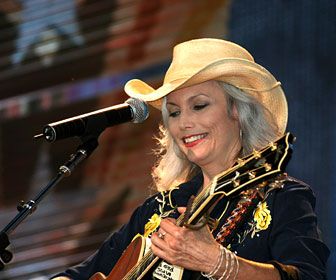
“Hard Bargain” is the sound of a seasoned heart choosing honesty over comfort—accepting that love, time, and memory rarely give us a fair deal, yet refusing to let the loss have the last word.
The title track “Hard Bargain” arrives with uncommon gravity because it sits at the emotional center of Emmylou Harris’ album Hard Bargain, released April 26, 2011 on Nonesuch Records. Even before a listener knows a single lyric, the record’s first-week impact signals that this wasn’t a quiet “late-career footnote”: Hard Bargain debuted at No. 18 on the Billboard 200 and No. 3 on Billboard’s Top Country Albums, selling about 17,000 copies in its first week—Harris’ highest Top Country Albums entry since 1980’s Roses in the Snow. Important, too, is how it was made: Harris recorded the album in a concentrated burst (reported as four weeks in August 2010) with an almost stark personnel list—primarily just Emmylou Harris, producer/multi-instrumentalist Jay Joyce, and drummer Giles Reaves. That choice tells you something about Harris’ instincts as an interpreter. She has always known when another writer’s words can mirror her own life more truthfully than her own pen can manage in the moment. Critics noted that Sexsmith’s song, “stricken by disappointment,” nevertheless carries a warmth that stands out amid the album’s darker meditations—perhaps exactly why Harris made it the record’s name on the cover.
So what is the “hard bargain” the song is really talking about?
It’s the bargain we make with time. The bargain we make with the versions of ourselves we outgrow. The bargain we make with love when we discover—too late—that devotion doesn’t always purchase safety. In the world of Hard Bargain, Harris is writing directly about grief and history—about Gram Parsons (“The Road”), about Emmett Till (“My Name Is Emmett Till”), about Hurricane Katrina (“New Orleans”). When the title track enters that landscape, it doesn’t compete with those headlines. Instead, it narrows the lens to the private ledger: the inward reckoning where you admit you’re worn down, but still standing—where you stop pretending resilience is glamorous and accept it as daily work.
Musically, the track’s country-leaning, back-porch feel has been noted by reviewers—banjo color, earthy percussion, the sense of a song played close to the body rather than projected into the distance. And that’s exactly where Emmylou Harris is most devastating: not when she over-sings, but when she understates, letting a line hang in the air like dust in late sunlight. Producer Jay Joyce frames her voice with a spareness that still feels “full,” a modern shimmer reminiscent (as some critics heard it) of the spacious atmosphere that once surrounded her on Wrecking Ball—but here, the mood is more intimate, almost whispered.
The deeper meaning, then, isn’t simply “life is hard.” It’s more specific—and more tender: sometimes the bargain is unfair, and you keep going anyway. You don’t deny the disappointment; you carry it with grace. You learn to live with the weight of what didn’t happen, the words that arrived too late, the people who didn’t stay. And you do it without turning bitter—because bitterness would be another kind of debt, another payment extracted by the past.
That is why “Hard Bargain” resonates in Harris’ voice. She doesn’t sing it like a complaint. She sings it like a hard-won self-portrait—weathered, lucid, still curious about the next morning. In a culture that loves to sell “reinvention,” Emmylou Harris offers something rarer: endurance with feeling intact.