 By Classic Oldies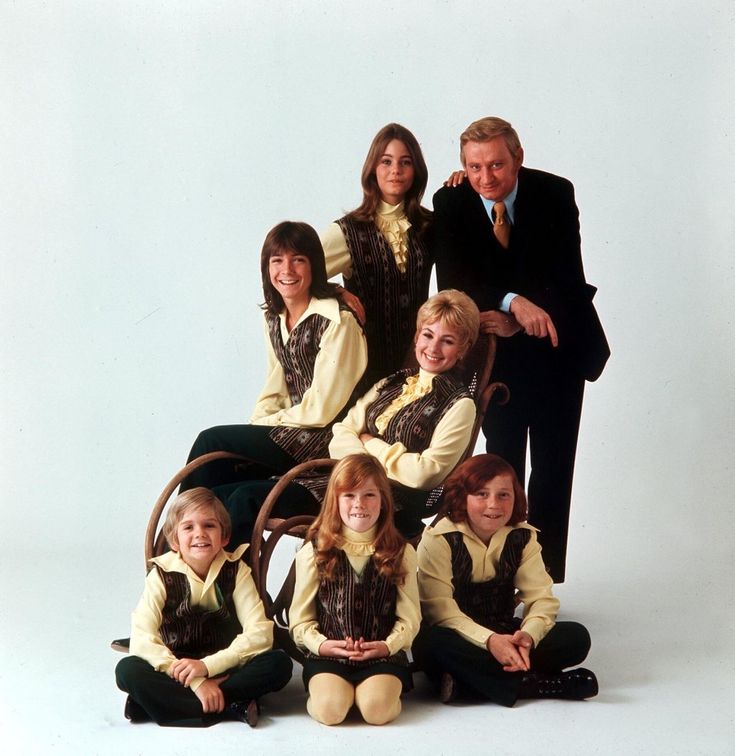
C’mon Get Happy was never just an opening theme for The Partridge Family; it was a bright little promise that, for a few minutes at least, music could make the world feel lighter, kinder, and wonderfully together.
Introduced in 1970 as the musical calling card of The Partridge Family, C’mon Get Happy was written by Wes Farrell and Danny Janssen, the same creative team deeply involved in shaping the group’s polished pop identity. In strict chart terms, the song did not build its legend in the United States as one of the act’s major Billboard singles. Unlike I Think I Love You, which soared to No. 1 on the Billboard Hot 100, C’mon Get Happy became famous in a different, more intimate way: it entered homes every week, attached to smiling faces, a painted bus, and the irresistible feeling that something cheerful was about to begin.
That difference matters. Some songs are remembered because they topped the charts. Others are remembered because they became part of life itself. C’mon Get Happy belongs to the second group. The moment those familiar notes arrived, audiences did not need a radio announcer or a chart rundown to know what they were hearing. They knew the sound, the mood, and the picture it carried with it. It was a television theme, yes, but it was also a cultural welcome mat.
Part of the song’s magic lies in its construction. The melody is simple, immediate, and full of upward motion, almost as if it refuses to sit still. The lyric does not wander into complexity. It invites. It urges. It opens the door. That was exactly the point. The Partridge Family was created at a time when television was still one of the great shared rooms in American life, and C’mon Get Happy had to do a great deal of work in a very short space: introduce the family, establish the energy, and promise joy. It did all three with remarkable ease.
There is also a fascinating bit of history behind the version many people remember. In the show’s early presentation, viewers heard a longer opening built around the line about hearing the song that the family was singing, before the familiar chorus took over. Over time, the chorus-forward identity of C’mon Get Happy became the lasting shorthand. That is the version that settled into memory, and for good reason. It cuts straight to the emotional center. No hesitation, no distance, no unnecessary setup. Just a burst of brightness.
Like much of the Partridge Family sound, the recording itself was crafted with great professional care. Though the television premise suggested a complete family band, the records were built largely by experienced Los Angeles session musicians and studio singers, with David Cassidy and Shirley Jones providing the most recognizable featured vocals from the cast. That studio truth has sometimes been used to dismiss the group as manufactured, but that judgment misses something essential. Pop music has always involved craft, illusion, arrangement, and presentation. What matters in the end is whether the song reaches people. C’mon Get Happy absolutely did.
The song’s meaning is easy to underestimate because it sounds so effortless. But beneath the sunshine, it offered a very specific emotional idea. It suggested that happiness was not something distant or complicated; it was something communal, something you could step into with other people. In the early 1970s, that mattered. After a turbulent previous decade, there was a real hunger for sounds that felt friendly rather than confrontational, melodic rather than heavy, and reassuring without being dull. C’mon Get Happy answered that need in less than a minute of airtime each week.
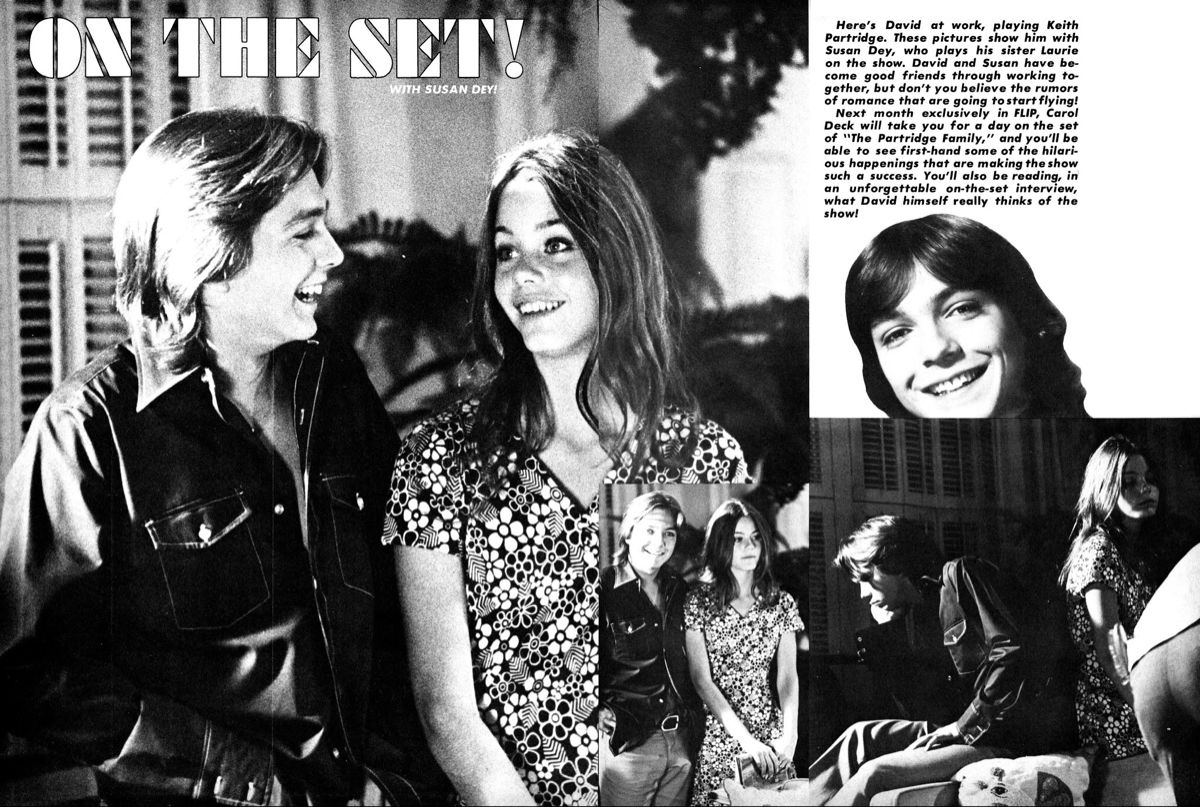
And then there was David Cassidy, whose presence helped turn the song from a catchy theme into a generational memory. He had charisma that television could barely contain, and the show knew how to frame it. Yet the warmth of Shirley Jones and the family concept softened the idol-making machinery. What emerged was a fantasy that felt unusually inviting: not a distant rock mythology, but a family that could climb aboard a bus, sing through small troubles, and keep moving. C’mon Get Happy was the sound of that fantasy in its purest form.
Its legacy has lasted because it still works on two levels at once. On the surface, it is bright, catchy, and almost impossible to resist. Beneath that, it carries the texture of an era: after-school afternoons, network television, bubblegum pop crafted with precision, and a time when a theme song could become as beloved as a hit single. Even people who could not tell you what chart position it reached, or whether it was ever meant to compete head-on with radio smashes, often know the chorus by heart. That kind of recognition is its own form of triumph.
What makes C’mon Get Happy endure is not complexity. It is sincerity in a carefully polished package. It asks for very little from the listener, but it gives back a familiar comfort that has outlived trends, arguments, and changing tastes. In a world that often prizes edge, irony, and reinvention, this song still stands there smiling, untouched in its purpose. It wanted to make people feel good. Decades later, it still does.
That may be the most touching part of all. The song never pretended to be darker than it was, deeper than it was, or more rebellious than it was. It simply arrived, bright as morning television, and left behind a memory that still glows. For many listeners, The Partridge Family begins there. So does the smile.