 By Classic Oldies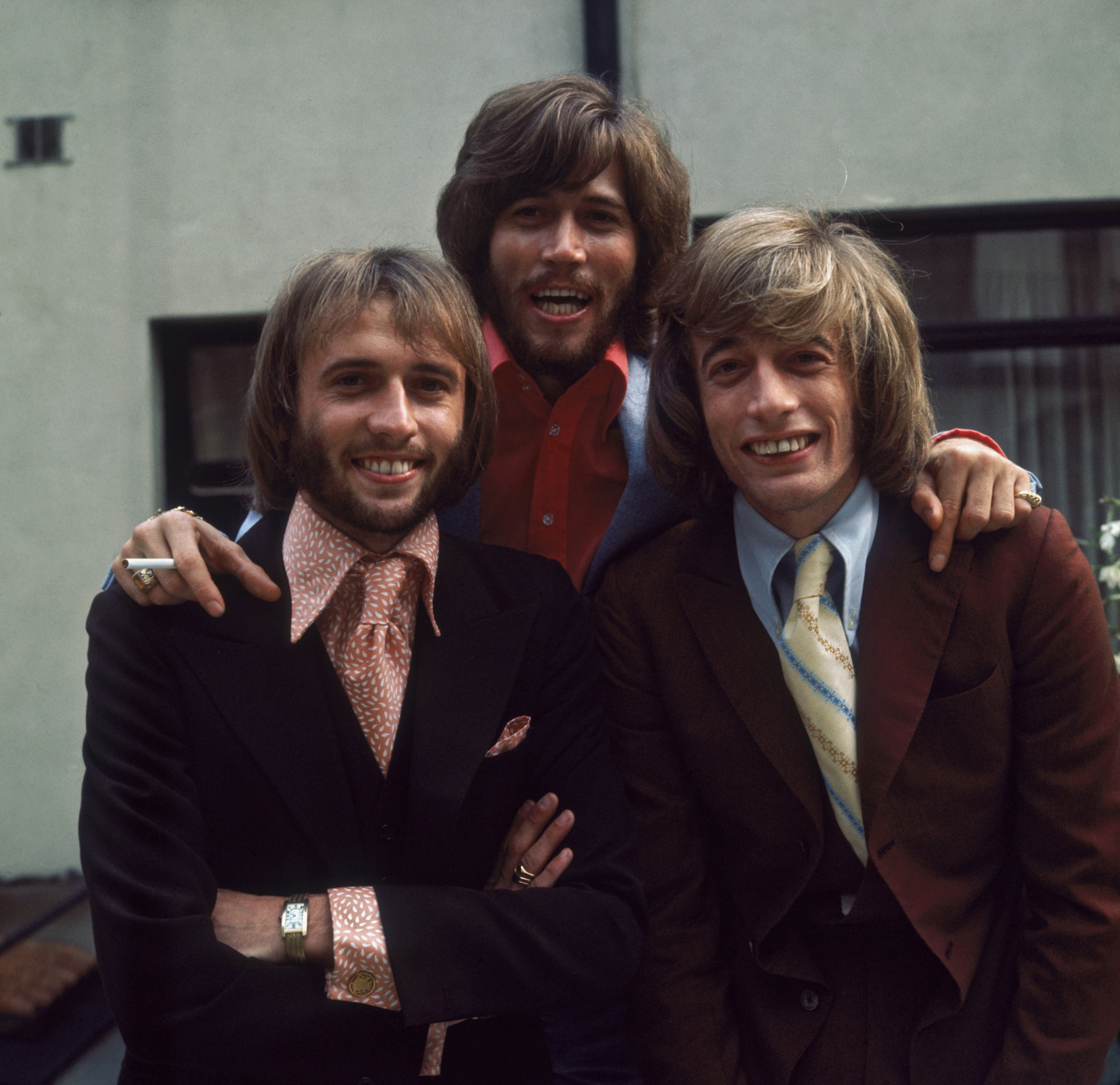
Long before global fame, I Am the World revealed the Bee Gees reaching beyond teenage pop and into something grander, lonelier, and far more lasting.
There is something deeply moving about hearing a future giant before the world has fully noticed him. That is part of the quiet power of I Am the World, one of the most revealing songs from the Bee Gees during their Australian years. Released by the group in late 1966 and included on the album Spicks and Specks, the song did not become an international landmark on the scale of the records that would later make the brothers famous. In Australia, it reached No. 17 on the national chart, a respectable showing but far from the cultural thunderclap of Spicks and Specks, which had climbed to No. 4. And yet, artistically, I Am the World feels like one of the early moments when the true scale of Barry Gibb as a songwriter began to come into focus.
The story behind the song makes it even more fascinating. Barry Gibb wrote I Am the World while still astonishingly young, at a time when the Bee Gees were trying to break through in the Australian pop scene. Before the brothers recorded their own version, the song had already been given to Billy Thorpe and the Aztecs, who cut it in 1965. That alone says something important. Even before the Bee Gees became major stars in their own right, Barry was already writing material that other performers wanted. But when the group finally recorded it themselves, the song took on a more intimate and prophetic quality. In their hands, it no longer sounded simply like a strong pop composition. It sounded like a personal statement from a young band whose ambitions were already far larger than the room they were standing in.
Musically, I Am the World belongs to that rich and transitional period when the Bee Gees were moving away from straightforward beat-group influences and toward the more emotional, melodic, and harmonically sophisticated style that would define their best work. The arrangement carries that unmistakable mid-1960s sense of yearning: graceful but unsettled, melodic yet searching. And over it all is the voice of Barry Gibb, still youthful, but already marked by conviction. What makes the performance special is not polish alone. It is the feeling that he is reaching for something almost too large to name.
The meaning of I Am the World has always rested in that reach. It is a song about identity, but not in a narrow or ordinary sense. This is not merely a love song, nor simply a declaration of self. It feels broader than that, almost spiritual in its language and emotional intent. The lyric carries a kind of youthful universalism, the belief that one life can somehow contain memory, longing, hope, and history all at once. In lesser hands, that could have sounded inflated. In the hands of the young Bee Gees, it sounds vulnerable. That is the song’s secret strength. It is grand without being cold. It dreams big, but it still aches.
Listening now, it is hard not to hear I Am the World as a bridge between eras. On one side is the hungry Australian group still fighting for recognition, still refining its identity, still learning how to turn promise into permanence. On the other side is the extraordinary run of songwriting and recording that would soon take the Bee Gees to England and then to worldwide prominence. In that sense, the song matters not only for what it is, but for what it predicts. You can hear the early signs of Barry’s love for emotional scale, of the brothers’ instinct for rich harmony, and of their unusual ability to make pop feel reflective rather than disposable.
There is also a certain poignancy in its place within the Spicks and Specks era. That album captured the Bee Gees at a turning point, just before they left Australia and began the next chapter of their career. Many listeners return to Spicks and Specks for the title track, and rightly so, but I Am the World deserves its own careful hearing because it tells a deeper story. It shows a young songwriter not merely trying to write a hit, but trying to say something lasting. That difference matters. Plenty of groups from the period made clever records. Far fewer sounded as if they were already searching for emotional permanence.
One of the reasons the song lingers is that it does not wear its ambition loudly. It unfolds with dignity. The melody rises and falls with a sense of inward drama, and the Bee Gees harmonies give the track a tenderness that softens its philosophical scale. It is easy to imagine why the song did not explode commercially in the way some brighter, more immediate singles did. It asks a little more of the listener. It is more inward, more reflective, more concerned with feeling than instant impact. But those are often the songs that age best.
And age well it has. For listeners who know the Bee Gees mainly through later triumphs, I Am the World can come as a surprise. It reveals that the emotional seriousness of the group did not arrive after fame; it was there very early, already embedded in Barry’s writing. The song reminds us that the Bee Gees were never just hitmakers. Even in youth, they were trying to give shape to loneliness, wonder, and the restless feeling of becoming.
That is why I Am the World still resonates. It captures a rare moment when talent, innocence, and ambition are all audible at once. Not yet the polished international phenomenon, not yet the masters of reinvention, the Bee Gees here sound like what they were: gifted young men standing at the edge of a much larger life. And in that fragile, searching performance, you can hear the future beginning.