 By Classic Oldies
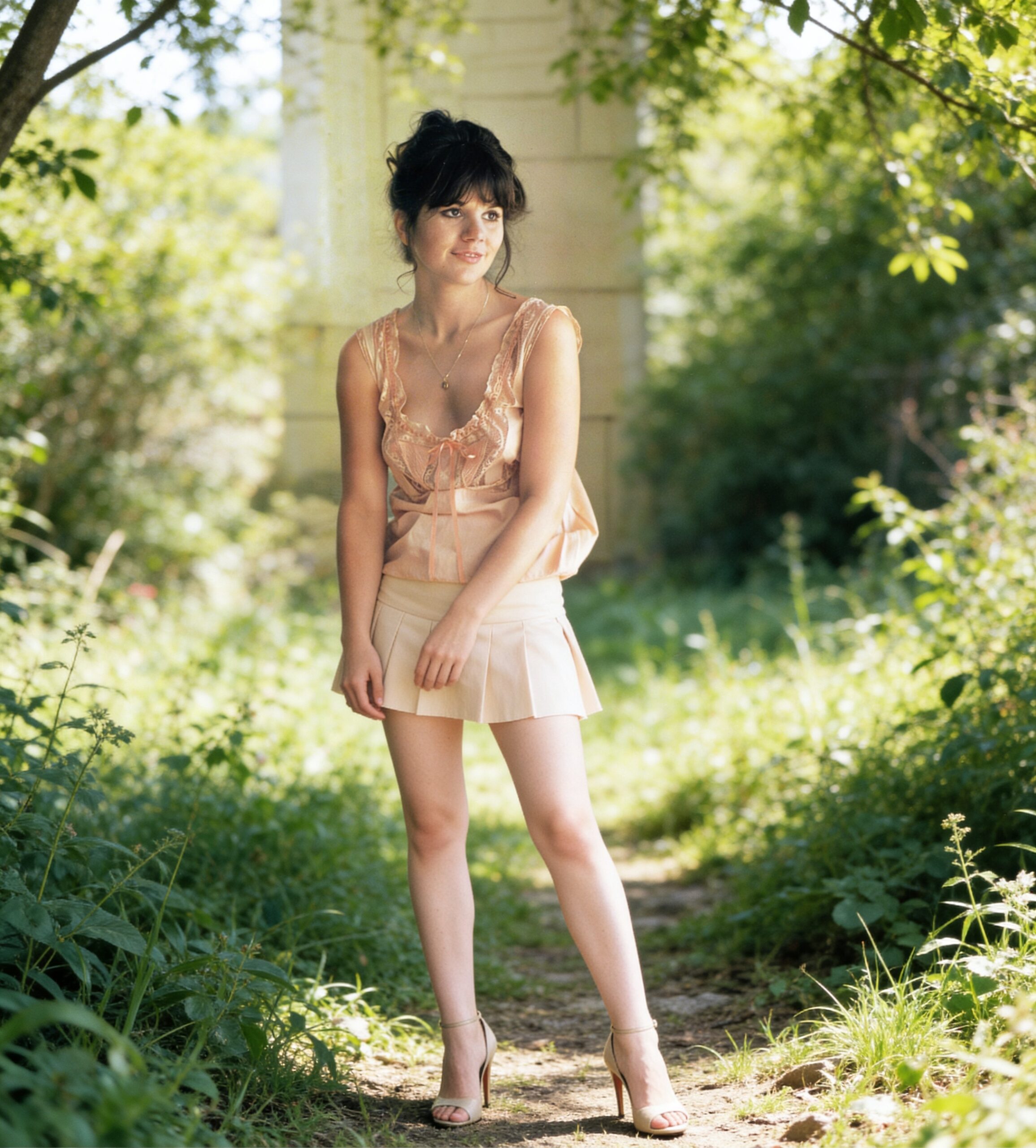
A timeless song of brave-faced heartbreak, That’ll Be the Day became in Linda Ronstadt‘s voice both a loving salute to rock and roll’s first golden years and a fresh 1970s hit with its own pulse.
When Linda Ronstadt released That’ll Be the Day from her 1976 album Hasten Down the Wind, she was not simply revisiting an old favorite. She was taking one of the foundational songs of American rock and roll and carrying it, gracefully and confidently, into a new era. Her version climbed to No. 11 on the Billboard Hot 100, a strong showing that proved the song still had plenty of life left in it nearly twenty years after its first explosion. That mattered. It meant the public did not hear Ronstadt’s recording as a museum piece. They heard it as a living song.
The story begins, of course, with Buddy Holly. Written by Buddy Holly and Jerry Allison, and made famous by Buddy Holly and The Crickets in 1957, That’ll Be the Day was more than an early hit. It was a turning point. Holly’s original went to No. 1 in the United States and the United Kingdom, helping define the quicksilver charm of early rock and roll: youthful, direct, a little wounded, and somehow smiling through the pain. The title itself came from a line spoken by John Wayne in the film The Searchers, proof that even then, popular music was absorbing the language of American myth and everyday feeling all at once.
What makes Ronstadt’s version so memorable is that she understood the history without being trapped by it. By the mid-1970s, she had already become one of the most important voices in American music, able to move between rock, country, folk, and pop with astonishing ease. On Hasten Down the Wind, produced by Peter Asher, she brought that rare gift to That’ll Be the Day. The arrangement is bright, clean, and radio-ready, but it never feels slick in the empty sense. The guitars ring with purpose, the rhythm moves with gentle confidence, and Ronstadt’s voice stands in the center like a beam of clear light. She does not imitate Holly. She honors him by refusing imitation.
The lyric itself has always carried a fascinating contradiction. On the surface, it sounds almost teasingly defiant: if you say you’ll leave, I do not believe you; if you say you’ll make me cry, that must be a lie. But beneath that bravado is a tremor of vulnerability. The famous line about that being the day when I die has never sounded purely casual. It is the kind of exaggeration people use when they are trying not to reveal how much something really matters. In Holly’s hands, the song had the spark of young swagger. In Ronstadt’s, it gains a deeper emotional contour. She gives the words a woman’s poise and a grown musician’s sense of emotional weather. There is strength in her phrasing, but also ache. She lets us hear both at once.
That duality may be the secret of why the recording still feels so satisfying. Linda Ronstadt had one of those voices that could brighten a room without ever losing its shadow. Even in upbeat material, she could suggest longing, memory, and distance. That is exactly what happens here. Her That’ll Be the Day moves with the buoyancy of classic pop, yet something in the performance tells us she knows the hurt behind the clever words. The result is not nostalgia for its own sake. It is recognition. Anyone who has ever tried to sound stronger than they felt will understand this song immediately.
There is also a larger musical story here. Ronstadt belonged to a generation that loved America’s musical past enough to keep it in motion. In the 1970s, she helped prove that roots music could live comfortably on contemporary radio without losing its soul. Her success with songs drawn from earlier traditions was never accidental. She had impeccable taste, but more than that, she had instinct. She knew that a great song survives because human feeling survives. The decades change, fashions shift, production styles come and go, yet heartbreak dressed up as confidence remains eternally recognizable.
For listeners who first knew the song through Buddy Holly, Ronstadt’s cover offered a lovely kind of return: familiar, but not frozen. For those who discovered it through her, it opened a doorway backward to rock and roll’s first bright dawn. That is one reason her version remains important. It acted as a bridge between generations of listening. One could step onto it from either side and arrive somewhere meaningful.
And perhaps that is the deepest meaning of Linda Ronstadt’s That’ll Be the Day. It reminds us that songs do not belong to one moment forever. They travel. They gather new shades of feeling. They wait for another voice to reveal another truth inside them. Ronstadt did exactly that. She took a classic built on youthful confidence and gave it a second life touched by elegance, experience, and emotional clarity. The hit status was real, the chart success was deserved, but the lasting achievement runs deeper than numbers. She made an old song feel present again, and in doing so, she quietly showed how memory itself can sing.