 By Classic Oldies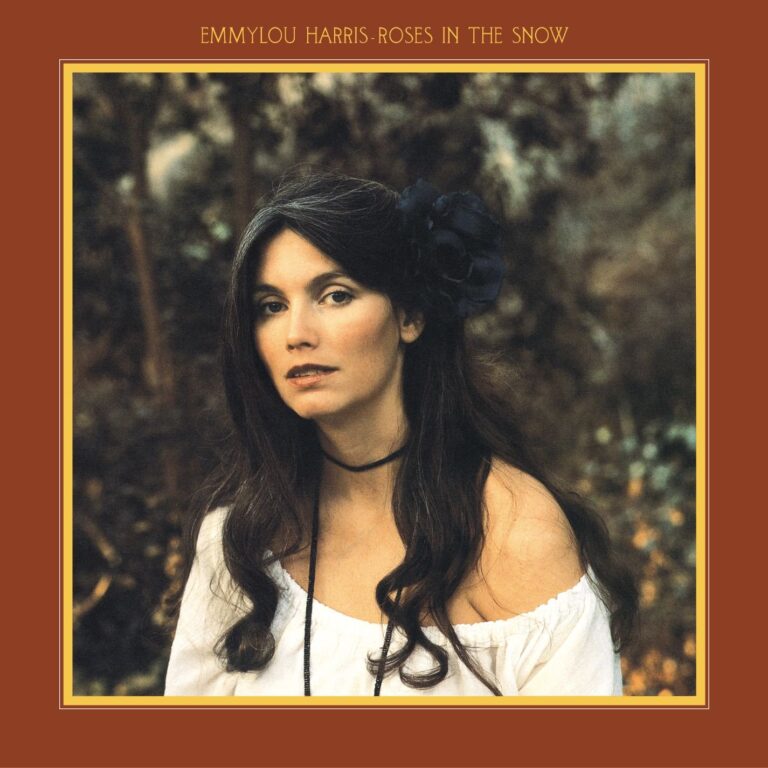
“Roses in the Snow” is Emmylou Harris turning the calendar of love into a hush of bluegrass—where joy, loss, and endurance all feel like the same season, just seen in different light.
When Roses in the Snow arrived on April 30, 1980, it didn’t announce itself with stadium bravado. It stepped in like winter sunlight: clear, quiet, and strangely comforting. For listeners who had followed Emmylou Harris through the country-rock blaze and into the deeper grain of traditional country, this record—and especially its opening track, “Roses in the Snow”—felt like a deliberate exhale. The album’s commercial footprint proved that restraint could still travel far: it debuted at No. 52 on the Billboard 200 (week of May 24, 1980) and later peaked at No. 26 (chart week of July 12, 1980), remaining on the chart for 34 weeks. On the country side, it rose even higher—No. 2 on Billboard’s Top Country Albums.
But charts only tell you how many people opened the door. They don’t tell you what was waiting in the room.
“Roses in the Snow”—written by Ruth Franks—is the first track, and it’s brief (just over two and a half minutes), the way certain memories are brief: not because they are small, but because they’re complete. The song moves through the seasons as if time itself were a love story—spring’s first promise, summer’s full bloom, and then the harder truth: what once felt effortless must eventually be carried. It doesn’t posture. It doesn’t plead. It simply tells you, with a folk-song plainness, that happiness and sorrow can share the same melody—sometimes even the same day.
That emotional clarity is inseparable from the album’s sound and setting. Roses in the Snow was recorded in Nashville in July 1979, produced by Brian Ahern, and shaped as a bluegrass-leaning statement—less electric shine, more acoustic truth. You can hear the intent in the company she kept: Ricky Skaggs, Tony Rice, Jerry Douglas, Albert Lee, and friends whose instruments don’t merely accompany the vocal; they answer it, like old companions finishing one another’s sentences. And hovering around the edges are voices that feel like blessings rather than “guest spots”—Dolly Parton, Linda Ronstadt, Johnny Cash, Willie Nelson, The Whites—a gathering that makes the record feel communal, almost porch-lit, as though the songs were chosen to be shared rather than displayed.
In that context, “Roses in the Snow” becomes more than a title track. It’s a mission statement: a reminder that beauty isn’t only the rose in warm weather—it’s the rose that persists when the world turns cold. The image is quietly radical. A rose is supposed to be soft, fleeting, ornamental. Snow is supposed to be harsh, blank, final. Putting them together doesn’t erase either one; it makes them truer. That’s what Emmylou Harris does so often at her best—she doesn’t sweeten the hard parts or darken the bright parts. She lets them sit side by side until they begin to sound like life.
The album’s wider story supports that reading. While “Roses in the Snow” itself wasn’t the big radio single, the project still produced notable hits: “Wayfaring Stranger” reached No. 7 on Billboard’s country chart, and her version of “The Boxer” reached No. 13. Even so, the record’s real legacy is not “hitmaking.” It’s trust-building: the sense that an artist is willing to step away from the obvious path and invite you somewhere quieter—then reward you with something lasting. That seriousness was recognized at the industry level too, with the album earning a Grammy nomination in Best Female Country Vocal Performance at the 23rd Annual Grammy Awards.
If you listen closely to “Roses in the Snow,” what stays with you is its emotional posture: not drama, but acceptance; not bitterness, but a kind of clear-eyed tenderness. It’s the sound of someone who has learned that love is not only the beginning of a story—it’s the endurance of it. And when the final phrase slips away, it leaves behind the oddest, truest comfort: that even in the coldest chapter, something living can remain—fragile, yes, but unmistakably there.