 By Classic Oldies
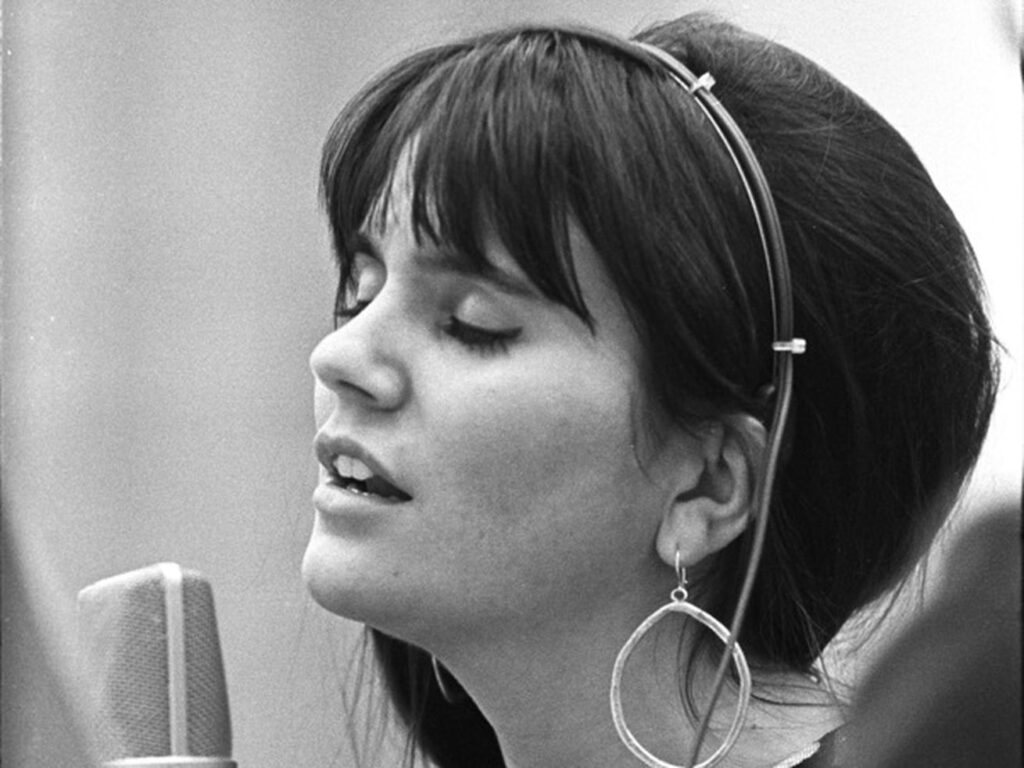
“I Can’t Let Go” is the ache of attachment dressed up as a bright, racing pop-rock song—when the body still reaches forward even after the mind has accepted the ending.
Linda Ronstadt released “I Can’t Let Go” in 1980 as the third single from her sharp-edged, new-wave-leaning album Mad Love (released February 26, 1980). On paper, its chart story looks modest; in feeling, it’s anything but. The single debuted at No. 74 on the Billboard Hot 100 dated June 28, 1980, then climbed steadily to a peak of No. 31 on August 16, 1980. It’s the kind of hit that didn’t arrive with fireworks—more like headlights appearing at the end of a long road—yet it has endured because the emotion inside it is painfully familiar: the struggle between pride and craving, between “I should” and “I still.”
The song itself has a deeper lineage than many listeners first realize. “I Can’t Let Go” was written by Chip Taylor and Al Gorgoni—names that carry real pop pedigree (Taylor is also known for co-writing “Wild Thing”). The earliest recording is credited to Evie Sands in 1965, a blue-eyed soul reading that gave the song its first pulse. Then, in 1966, The Hollies turned it into a major British hit, peaking at No. 2 on the Official UK Singles Chart. By the time Ronstadt claimed it in 1980, the song already carried the feel of a “survivor”—a melody that keeps finding new voices because the wound it describes never goes out of style.
What’s most striking about Ronstadt’s version is where she placed it. Mad Love wasn’t another easy continuation of her ’70s dominance; it was a purposeful swerve into the brisk, angular energy of late-’70s rock and new wave, produced by her longtime collaborator Peter Asher. The album’s very identity is forward-leaning—tight arrangements, modern bite—and yet “I Can’t Let Go” is emotionally ancient. It’s about the oldest human problem: knowing something is over and still behaving as if it isn’t. That contrast is exactly why the track hits so hard. The music moves like momentum; the lyric moves like memory.
There’s also something quietly cinematic about hearing Ronstadt sing this particular title. “I can’t let go” is not a poetic flourish—it’s a blunt admission, almost embarrassing in its honesty. Most of us don’t like to say it out loud. We prefer more dignified sentences: “I’ve moved on,” “I’m fine,” “It was for the best.” But this song refuses those polite disguises. It names the truth that arrives later, when the room is quiet: sometimes you don’t miss the person only—you miss the version of yourself that existed when you believed in them.
And Ronstadt, by 1980, was uniquely equipped to sell that truth. Her voice had always been powerful, but her power wasn’t just volume—it was clarity. She could sound decisive even when singing uncertainty. She could sound strong while describing collapse. On “I Can’t Let Go,” you hear that paradox: the vocal feels controlled, even confident, while the words confess a loss of control. It’s the sound of someone standing upright while the heart keeps reaching back—like a hand that won’t stop opening.
Because the single wasn’t her biggest chart triumph, it tends to be rediscovered rather than constantly replayed—one of those tracks people find again years later and think, How did I forget this? Maybe that’s its secret gift. It doesn’t feel overexposed. It feels personal, like a B-side to somebody’s life: the song you put on when you’ve done all the “right” things—kept busy, stayed composed, said the correct goodbyes—and still, at the end of the day, the attachment remains. Not dramatic. Not glamorous. Just stubbornly human.
In that sense, “I Can’t Let Go” is more than a 1980 single that peaked at No. 31. It’s a small, shining study of the moment after the ending—when you discover that letting go isn’t a decision you make once, but a practice you repeat… until one day, without fanfare, your hands finally come back to you.