 By Classic Oldies
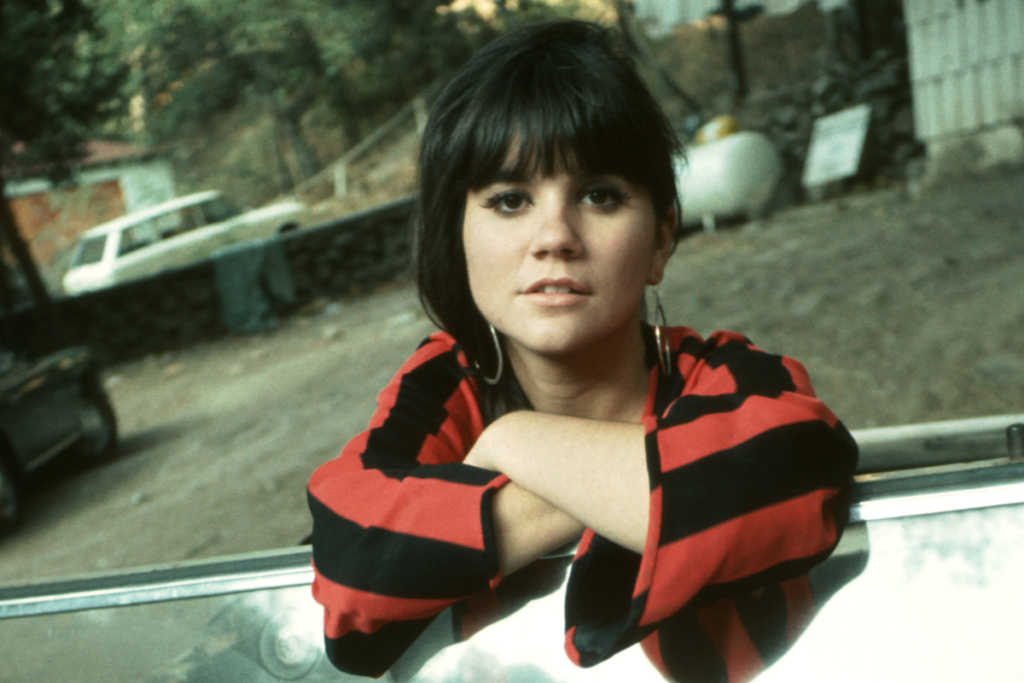
“Poor Poor Pitiful Me” is laughter with a bruise underneath—a sly, streetwise confession that Linda Ronstadt turns into something both tough and tender.
Linda Ronstadt’s “Poor Poor Pitiful Me” (her gender-swapped take on a Warren Zevon original) was released as a single on January 10, 1978—and it arrived like a grin that knows too much. On the U.S. charts, it debuted at No. 78 on the Billboard Hot 100 dated January 28, 1978, then climbed to a peak of No. 31 (appearing at that peak on the Hot 100 dated March 11, 1978). It wasn’t her biggest pop peak, but it became one of her most recognizable attitudes: the sound of a woman who can sing heartbreak without ever surrendering her backbone.
The song lives on Ronstadt’s career-defining album Simple Dreams, released September 6, 1977, produced by Peter Asher and recorded at The Sound Factory in Hollywood in mid-1977. The album itself was an era marker—five straight weeks at No. 1 on the Billboard album chart in late 1977—proof that Ronstadt wasn’t merely popular; she was central to the American radio imagination at that moment. And critics heard the craft too: Rolling Stone praised how Ronstadt and Asher “scaled down the production,” letting her voice evoke “a bittersweet world of disappointments, fantasies and cheerfully brazen assertions.” That description fits “Poor Poor Pitiful Me” perfectly: it’s brazen, yes—but the bitterness is real, and the “fantasy” is the tough mask we put on so we can keep moving.
The story behind the song begins with Warren Zevon, who wrote and first recorded “Poor Poor Pitiful Me” for his 1976 self-titled album Warren Zevon, produced by Jackson Browne, with backing vocals from Lindsey Buckingham. Zevon’s version is peak Zevon: wickedly funny, slightly dangerous, and laced with the kind of discomfort that makes you laugh—then wonder why you laughed. As the song’s background is often summarized, it’s full of sardonic verses that glance off bruising subjects, delivered with a shrugging, noir-ish charm.
Then it makes its most famous leap: from Zevon’s barbed male narrator to Ronstadt’s bright, fearless perspective. And here the behind-the-scenes detail matters, because it’s so human you can almost see it happening in the living room. Ronstadt has recalled that Jackson Browne taught her the song—bringing it to her directly—and she immediately balked at one of Zevon’s original verses, telling Browne she couldn’t sing those words because they weren’t “who I am.” With Zevon’s blessing, she replaced that verse with a new one—still mischievous, still a little wild, but now aligned with the persona Ronstadt could wear truthfully.
That small decision—changing a verse to protect her own integrity—says a lot about why Linda Ronstadt mattered. She wasn’t a singer who “covered” songs like costumes. She inhabited them, but only after turning them until the seams fit. In “Poor Poor Pitiful Me,” she keeps Zevon’s dark humor, but she aims it like a flashlight rather than a blade. The joke is still there—this narrator has met the wrong lovers, in the wrong places, at the wrong hours—but Ronstadt sings it with a wink that feels like self-awareness, not self-destruction. It’s the difference between being swallowed by chaos and surfing it.
And the song’s meaning—under all that swagger—turns out to be strangely tender. “Poor poor pitiful me” is a phrase people use when they want pity. But in Ronstadt’s mouth it doesn’t land as begging; it lands as defiance disguised as complaint. It’s what you say when you’ve been tossed around by romance and still refuse to act ashamed of wanting. It admits bruises without turning them into a personality. It lets the pain be real, but it won’t let the pain be the boss.
That’s also why the track feels so perfectly placed on Simple Dreams—an album balancing ache and muscle, softness and nerve. The record could deliver pure, open-throated yearning, but it could also snap its fingers and smirk. Wikipedia+1 “Poor Poor Pitiful Me” is the smirk with a heartbeat behind it.
If you play it now—years, even decades removed from 1977–78—it still lands because it understands something timeless: sometimes surviving your own love life requires humor. Not cruel humor. Not cynical humor. Just the kind that says, Yes, I fell. Yes, it hurt. And yes, I’m still standing—so don’t get too comfortable feeling sorry for me. That’s the real magic of Linda Ronstadt here: she makes resilience sound like rock ’n’ roll, and makes a “pitiful” line feel—somehow—like pride.