 By Classic Oldies
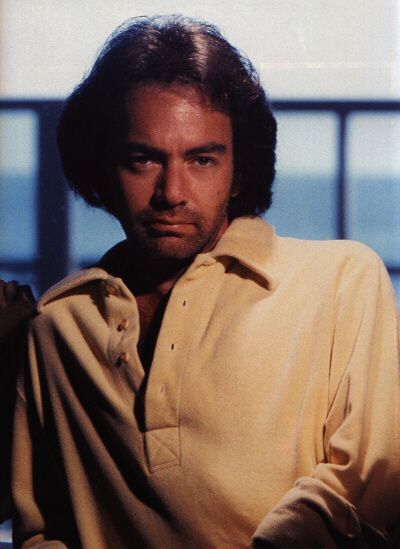
A song of regret rather than blame, Hurtin’ You Don’t Come Easy reveals Neil Diamond at his most vulnerable, singing not about losing love alone, but about the pain of knowing you helped break it.
Some songs enter the world like celebrations. Others arrive like a man sitting alone with his conscience. Hurtin’ You Don’t Come Easy belongs to that second kind of song, and that is precisely why it stays with people. When it was released, it was not one of the giant chart landmarks of Neil Diamond’s career. It made a far more modest impression on the American pop chart than classics such as Sweet Caroline, Cracklin’ Rosie, or later You Don’t Bring Me Flowers, and it found its natural home more with adult-oriented listeners than with the youth-driven pop rush of the day. But charts have never told the whole truth about a Neil Diamond song. Sometimes the quieter records are the ones that age with the greatest dignity.
What makes Hurtin’ You Don’t Come Easy so compelling is the emotional position it takes. This is not a song built on swagger, revenge, or romantic self-pity. It stands in a harder place. The title itself is wonderfully plainspoken, almost conversational, and that was always one of Neil Diamond’s great gifts as a writer. He could take everyday language and place it inside a melody until it sounded like something you had always felt but never managed to say. The phrase hurtin’ you don’t come easy carries guilt, resistance, tenderness, and sorrow all at once. It tells us immediately that the wound in this song is not casual. It is personal. It matters.
That is the hidden strength of the piece. So many breakup songs are written from the side of the injured person. Hurtin’ You Don’t Come Easy turns slightly and looks from the other direction. It speaks from the painful knowledge that love can fail without cruelty, and that even when someone does the hurting, the damage does not leave that person untouched. In Neil Diamond’s voice, that idea becomes especially powerful. He never had to oversing a line to make it feel lived in. He could press into a phrase with just enough grain and ache to make it sound as though the truth cost him something.
There is also something unmistakably mature in the song’s emotional world. This is not the drama of first heartbreak. It is the wearier, deeper sadness of adult love, where history, mistakes, pride, and tenderness all sit in the same room together. That is why the song continues to resonate so strongly. It understands that some of the hardest moments in life are not the ones where we are simply abandoned, but the ones where we realize we have played our own part in the sorrow. That kind of writing has always separated Neil Diamond from artists who were content merely to be catchy. Even in his most accessible work, there was often a reflective undercurrent, a sense that beneath the melody there was a restless inner life.
The backstory of Hurtin’ You Don’t Come Easy is less about scandal or sensational studio mythology and more about where it sits in the larger arc of Neil Diamond’s songwriting. By this period, he was already a major figure, fully capable of delivering huge singalong moments, but he never lost his instinct for the wounded, inward-looking song. That balance was essential to his identity. For every anthem that could lift an arena, there was another composition that seemed written for the solitary hour after everyone else had gone home. This song belongs to that second shelf, and many listeners treasure it for exactly that reason. It does not ask for applause first. It asks for recognition.
Musically, the song supports that mood with restraint. Rather than racing toward a grand payoff, it lets the emotional burden of the lyric do the work. That choice matters. In a lesser singer’s hands, a title this direct might have felt sentimental. In Neil Diamond’s hands, it feels human. He sounds neither theatrical nor detached. He sounds like someone trying to tell the truth before the silence becomes heavier than the words. That is why the performance still lands. It does not depend on trend, production fashion, or radio nostalgia alone. It depends on emotional credibility.
And that may be the finest way to understand Hurtin’ You Don’t Come Easy. It is not among the most loudly celebrated songs in the Neil Diamond catalog, but it is one of the clearest reminders of what made him special. He could be grand without losing intimacy. He could be commercial without becoming shallow. Most of all, he knew that some of the deepest songs are not about being wronged. They are about carrying the weight of having loved imperfectly. Long after chart numbers fade into trivia, that truth remains. And in this song, Neil Diamond gives it a voice that still feels tender, bruised, and unmistakably alive.