 By Classic Oldies
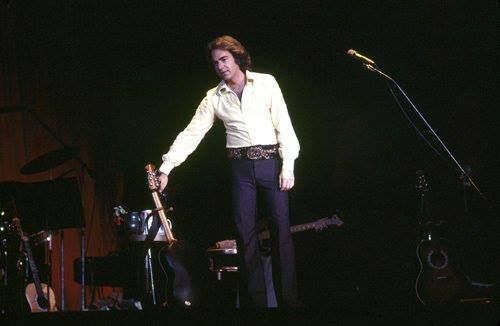
Yesterday’s Songs is one of Neil Diamond‘s warmest reflections on memory, fame, and the quiet bond between a singer and the people who never stopped listening.
Released in 1981, Yesterday’s Songs arrived at a meaningful moment in Neil Diamond‘s long career. It was the lead single from his album On the Way to the Sky, and it quickly reminded listeners of something they had always known about him: few artists could turn personal reflection into something that felt shared by millions. The song reached No. 11 on the Billboard Hot 100 and rose to No. 1 on the Adult Contemporary chart, a strong showing that confirmed Diamond still had a rare connection with the public. At a time when pop music was shifting around him, he answered not with reinvention for its own sake, but with sincerity.
That sincerity is what gives the song its lasting power. On the surface, Yesterday’s Songs sounds like a graceful, nostalgic pop record, full of melody and warmth. But underneath that polished sound is a deeper feeling: gratitude mixed with vulnerability. Diamond was not simply reminiscing about old hits or earlier glory. He was singing about what songs do after they leave the studio, after the charts, after the noise of the moment fades. They stay behind. They travel with people. They return in private hours. They become companions.
That is why the song has always felt slightly different from ordinary nostalgia. It is not trapped in the past. Instead, it asks what survives. In Diamond’s hands, yesterday is not a closed door. It is a living presence. The song suggests that music can outlast confusion, disappointment, distance, and time itself. For an artist whose work had already become part of so many personal histories, that idea carried special emotional weight. By 1981, Neil Diamond was already a major figure with a songbook that stretched through the late 1960s and 1970s, from grand anthems to intimate confessions. Yesterday’s Songs sounds like a man looking over his shoulder without losing sight of the road ahead.
There is also a subtle autobiographical thread running through it. Diamond had long balanced two selves in public life: the stadium-sized performer and the inward, searching songwriter. This song lets those two selves meet. It has the accessibility of a radio single, yet the emotional center is unusually tender. He seems to be speaking not only to an audience, but almost to the songs themselves, as if they were old friends that carried pieces of him into the world. That is part of the beauty here. The record never feels self-important. It feels human. A little wistful, a little thankful, and deeply aware that music can preserve what ordinary life cannot hold forever.
Musically, the recording fits beautifully within Diamond’s early-1980s sound. It is smooth, melodic, and polished, but not cold. The arrangement gives the song room to breathe, allowing his voice to do what it always did best: sound strong without hiding emotion. He did not oversing it. He let the lyric do its work. That restraint matters. A lesser performance might have turned the song into sentiment. Diamond turns it into recognition. The feeling is not simply that the past was beautiful, but that it still matters because it shaped who we became.
The title itself is deceptively simple. Yesterday’s Songs could have been a phrase about old records, fading radio memories, or sentimental replay. But Diamond uses it in a fuller way. These are the songs that followed people through seasons of love, loneliness, celebration, and change. They are not relics. They are witnesses. And perhaps that is the song’s real meaning: music endures because feeling endures. We change. The years move. But a melody tied to a real moment can return with astonishing force.
In the larger story of Neil Diamond‘s catalog, Yesterday’s Songs occupies a special place. It may not be discussed as often as some of his biggest signature records, yet it captures something essential about his artistry. He always understood that a popular song could be both immediate and lasting, accessible and deeply personal. This one stands as a quiet testament to that gift. It honors memory without becoming trapped by it. It celebrates connection without overstating it. And it reminds us that some songs do more than entertain us. They accompany us, then wait patiently for the moment we need them again.
That is why Yesterday’s Songs still lands with such gentle force. It is not merely about the past. It is about the mysterious life music continues to live inside us. And when Neil Diamond sings it, you can hear an artist who understood that his greatest success was never just chart numbers or album sales. It was the fact that his songs became part of other people’s memories. Few compliments are greater than that. Few songs express it more gracefully.