 By Classic Oldies
A Quiet Prayer of Devotion Wrapped in Gentle Pop Perfection
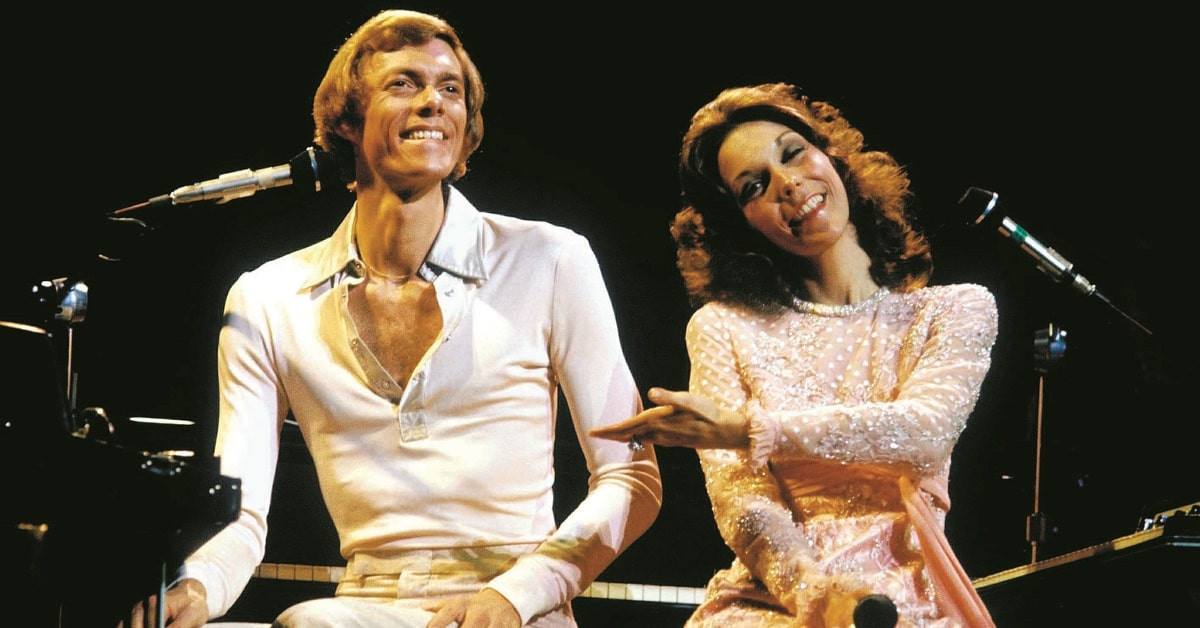
When (They Long to Be) Close to You was released in 1970, it transformed The Carpenters from promising newcomers into defining voices of soft rock’s golden age. Issued as the lead single from their second studio album, Close to You, the track climbed steadily until it reached No. 1 on the Billboard Hot 100, where it held its position for four weeks. This gentle ballad, written by the indomitable team of Burt Bacharach and Hal David, had previously been recorded by several artists—most notably Richard Chamberlain and Dionne Warwick—but it was Karen and Richard Carpenter who finally unlocked its full emotional resonance. Their version not only won two Grammy Awards but also became an indelible moment in American pop history, ushering in a new standard of polished, intimate production that would shape much of the decade’s sound.
At its heart, (They Long to Be) Close to You is less a love song than a whispered confession—its beauty lies not in grand declarations but in delicate understatement. Karen Carpenter’s voice, clear and aching with sincerity, conveys a yearning so pure it feels timeless. There is no artifice here, only the quiet astonishment of someone discovering how profoundly another person’s presence can transform the world. Richard Carpenter’s meticulous arrangement supports this intimacy with layers of piano, strings, and his own harmonies—an architecture so smooth it risks perfection yet remains deeply human through Karen’s tremulous delivery. The moment those trumpets enter near the song’s conclusion, arranged by Burt Bacharach himself, it is as though the heavens briefly open—a moment of cinematic light cutting through the stillness.
The song’s origins stretch back to 1963, when Bacharach and David first penned it in their signature blend of sophisticated melody and conversational lyricism. Yet it languished for years without finding its definitive interpreter. The Carpenters’ rendition succeeded precisely because it distilled everything Bacharach and David had written about—the fragility of affection, the mystery of attraction—into something elemental. Richard’s multi-tracked harmonies created an enveloping warmth that mirrored the lyrical theme: that universal longing to be near another soul, to bask in their light as others do.
Culturally, (They Long to Be) Close to You arrived at a curious juncture in American music. The airwaves were filled with rebellion and experimentation—rock was expanding outward into psychedelia and protest. Against that backdrop, The Carpenters’ pristine melancholy felt almost radical in its restraint. It offered sanctuary—a return to tenderness amid chaos. Over half a century later, its influence endures not just as a pop standard but as an emblem of vulnerability rendered eternal through simplicity. Few songs have captured love’s trembling anticipation so flawlessly; fewer still have done so with such unguarded grace.