 By Classic Oldies
A Sunlit Expression of Love and Contentment at the Height of Pop Perfection
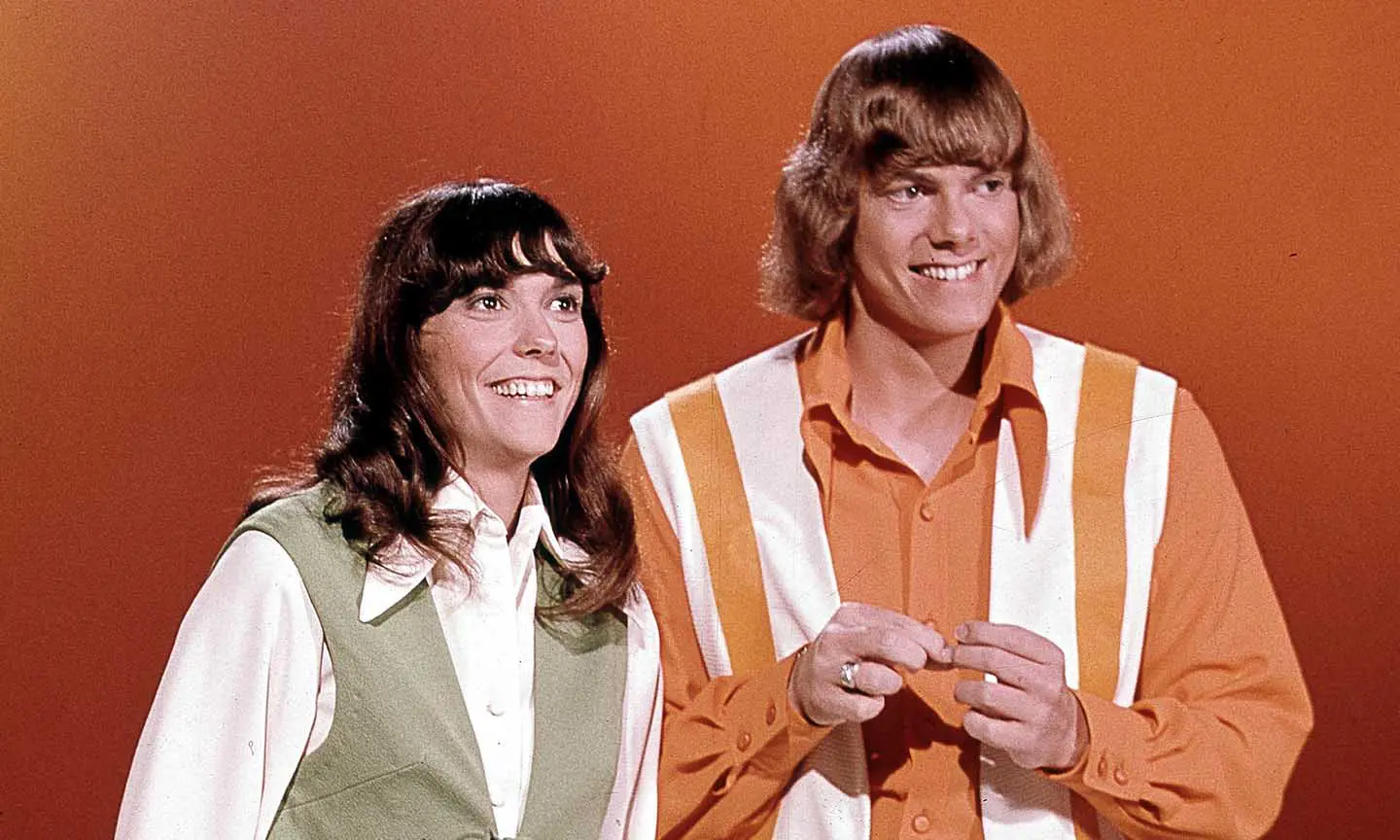
When “Top of the World” first graced the airwaves in 1973, it crowned The Carpenters’ remarkable string of chart successes with a radiant burst of joy. Originally featured on their 1972 album A Song for You, the track was not immediately intended as a major single. Yet, by late 1973—after an unexpected surge in popularity from country radio and a cover by Lynn Anderson—the duo revisited the song, rerecorded Karen’s vocal, and released it as a single. The result was undeniable: it soared to No. 1 on the Billboard Hot 100, confirming Karen and Richard Carpenter’s place at the summit of early‑70s pop music. It would become one of their most universally beloved recordings—a testament to their rare ability to blend warmth, precision, and sincerity into something that felt both effortless and eternal.
At its core, “Top of the World” is a portrait of uncomplicated happiness—an emotional clarity rarely sustained in popular song without lapsing into sentimentality. But what makes this piece endure is how The Carpenters transform simplicity into transcendence. The melody, co‑written by Richard Carpenter and John Bettis, moves with an almost pastoral ease: breezy steel‑guitar licks ripple through a bright arrangement that evokes open skies and rolling fields. There’s a touch of country flavor—lightly strummed acoustic textures and pedal‑steel accents—that situates the track somewhere between California pop and Nashville gentility. It’s music that feels airborne, lifted by optimism yet grounded in craftsmanship.
And then there’s Karen Carpenter’s voice—clear as glass, tender as sunlight on water—delivering each phrase with an intimacy that makes joy seem sacred rather than naïve. Her performance radiates sincerity; she sings not as someone boasting about happiness but as one who has discovered it quietly within herself. That distinction matters deeply to understanding the song’s emotional gravity: “Top of the World” does not chase ecstasy; it inhabits peace. In her phrasing, one hears both wonder and gratitude, as though love has reoriented her entire perception of life itself.
Lyrically, Bettis captures that transformation through images of nature—the wind’s whisper, the vastness of skies—where every element reflects an inner state of harmony. This union between outer world and inner feeling mirrors what The Carpenters themselves represented in American pop culture: artists who distilled everyday emotion into crystalline sound. Their production aesthetic—pristine harmonies layered with orchestral precision—became synonymous with 1970s soft pop’s golden sheen. Yet beneath that polish lies genuine emotional resonance. “Top of the World” endures because it conveys contentment without irony, joy without artifice—a rare emotional purity that continues to lift listeners decades later.
In retrospect, the song stands as a bright emblem of The Carpenters’ legacy: an immaculate convergence of melodic grace, technical mastery, and heartfelt expression. It is the sound of sunlight captured on vinyl—a reminder that sometimes perfection is not cold or distant but warm, human, and gloriously simple.