 By Classic Oldies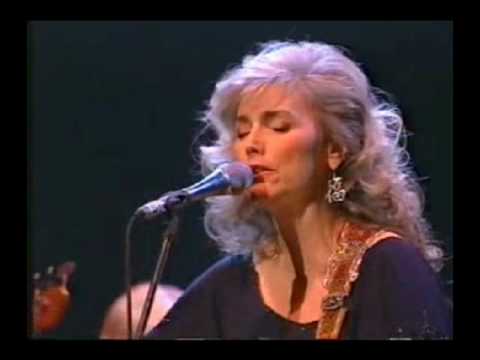

“Jordan” is a gospel mirror held up to the end of the road—quietly reminding us that sooner or later, every life comes to a crossing it can’t talk its way around.
On April 30, 1980, Emmylou Harris released Roses in the Snow, a record that gently but decisively shifted her spotlight toward bluegrass and traditional spiritual repertoire. Nestled inside that album is “Jordan”—a compact 2:07 track credited as Traditional; arranged by Brian Ahern. It was not issued as a single (the album’s singles were “Wayfaring Stranger”—which reached No. 7 on Billboard’s country chart—and “The Boxer,” which reached No. 13). So the “ranking at release” for “Jordan” is best understood through the album’s impact: Roses in the Snow peaked at No. 26 on the Billboard 200 and No. 2 on Billboard Top Country Albums.
Those numbers matter, but the deeper story is what they carried: a mainstream audience making room for old songs, old warnings, and old comfort—delivered in a voice that could make tradition feel freshly lived.
“Jordan” is one of those gospel pieces that has traveled for decades through church pews, radio waves, and front-porch harmonies. While Roses in the Snow credits it as traditional, the song is often attributed to Fred A. Rich in performance databases and later documentation. The lyric begins with an invitation—“Oh, come in as you tread life’s journey…”—and it doesn’t waste time getting to its central image: the River Jordan as the final boundary, cold and deep, where belief stops being a mood and becomes a necessity.
That image—Jordan as the crossing—has always been one of gospel music’s most powerful metaphors. It’s a way of speaking about death, judgment, and the “last mile” without sounding clinical. In “Jordan,” the river isn’t romantic or symbolic in a vague poetic sense. It is bluntly physical: wide waters, roaring billows, a current that doesn’t care how confident you felt on dry land. The song’s message is clear enough to be almost uncomfortable: if you want a guide for the crossing, don’t wait until the shoreline is under your feet.
This is where Emmylou Harris becomes the perfect messenger. Roses in the Snow was recorded in Nashville in July 1979 and produced by Brian Ahern, and it’s famously filled with guest voices—Johnny Cash, Dolly Parton, Linda Ronstadt, Ricky Skaggs, and others. For “Jordan,” the presence of Johnny Cash matters in a special way. Apple Music’s editorial note even encourages listeners to listen for Cash’s “bass-baritone” on “Jordan,” and Discogs’ detailed credit listing notes Cash providing harmony/backing vocals on that track. Cash doesn’t “decorate” the song—he grounds it. His voice carries the weight of lived miles, the kind of tone that makes the word “judgment” feel less like a theological term and more like a midnight thought.
Musically, the performance is spare, almost brisk—just over two minutes—yet it leaves a long echo. It doesn’t linger because it is dramatic; it lingers because it is certain. The bluegrass-leaning approach of the album—its clean picking, its plainspoken blend—keeps the song from turning into sermonizing. Instead, it feels like a well-worn truth passed from one hand to another. A warning sung gently is still a warning.
And that’s the ache at the heart of “Jordan”: it insists that life’s everyday confidence can be a kind of illusion. The lyric speaks to the person who feels “pure and safely” on their own—until the weather changes, until the ground disappears, until you reach the end of your pilgrim way. It’s not trying to frighten; it’s trying to sober. It asks, in effect: When the music stops and the room empties, what will you carry with you?
Hearing Emmylou Harris sing “Jordan” today can feel like opening an old drawer and finding a letter you didn’t know you saved—creases, fingerprints, the faint smell of time. It’s a short track, but it contains a whole philosophy: that the sweetest comfort is not denial, but preparation; not bravado, but companionship. And in those harmonies—especially with Johnny Cash standing like a dark pillar behind her—you can almost feel the river itself: cold, wide, real… and waiting.