 By Classic Oldies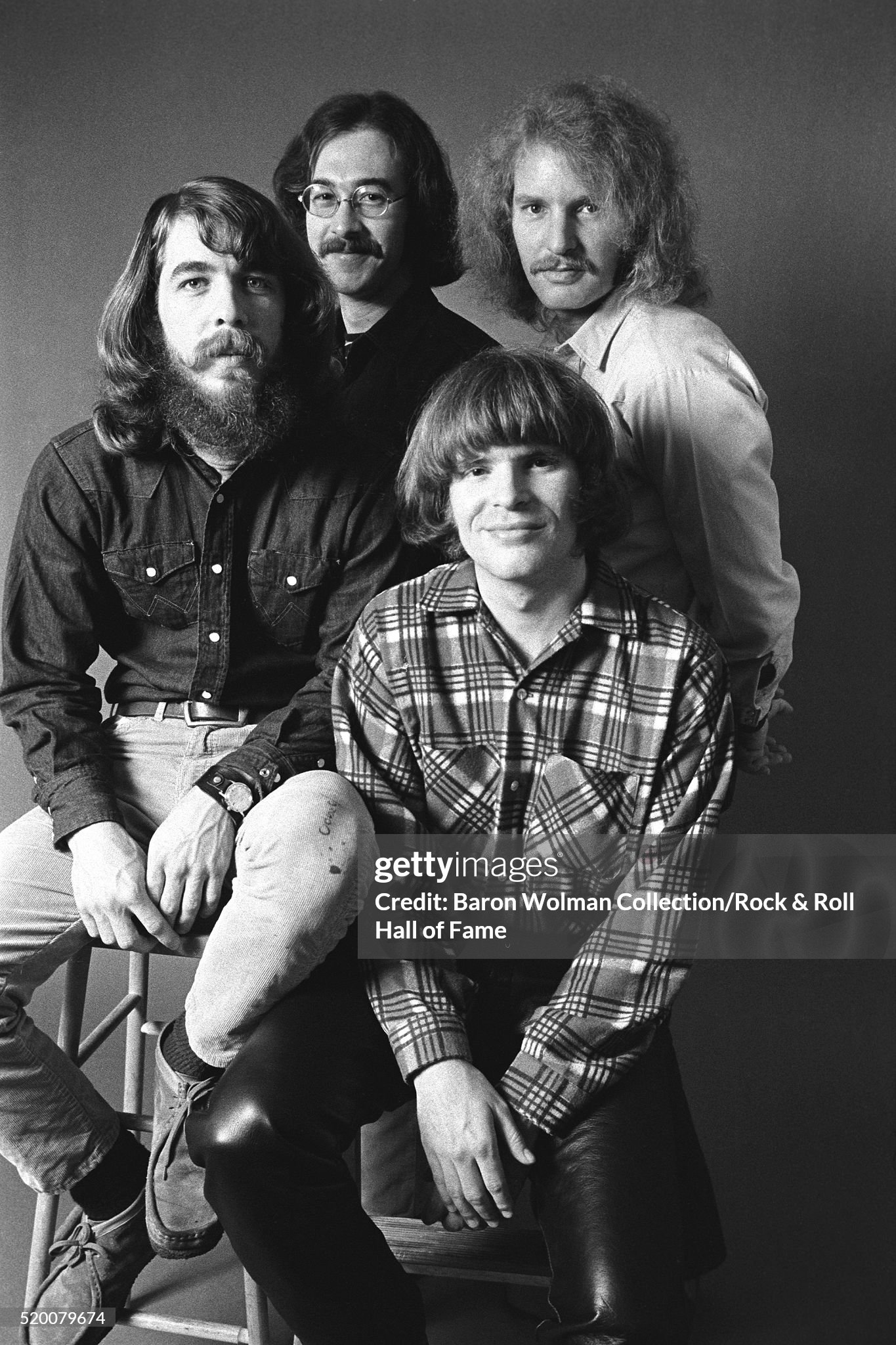
A fierce medley from September 1971, Green River/Susie Q caught Creedence Clearwater Revival at full voltage just before the road began to run out.
Recorded during Creedence Clearwater Revival‘s European tour between September 4 and 28, 1971, and later issued on the 1973 live album Live in Europe, the medley of Green River and Susie Q stands as one of those performances that feels bigger than a track listing. It is not simply two familiar songs tied together for convenience. It is a compact portrait of what made CCR so commanding onstage: no wasted movement, no decorative excess, just a hard rhythm section, a cutting guitar, and songs that seemed to arrive already carrying dust, heat, river water, and memory.
The historical moment matters here. By September 1971, the band was no longer the four-man unit that had conquered radio only a few years earlier. Tom Fogerty had left in early 1971, reducing the group to a trio of John Fogerty, Stu Cook, and Doug Clifford. That change altered the sound. It became leaner, tougher, and in some ways more exposed. When these European recordings were made, CCR was still a formidable live act, but there was also a sense that the old balance had shifted. Heard from that angle, this medley feels thrilling and bittersweet at the same time.
Green River had already become one of the group’s defining songs. Released as a single in 1969, it climbed to No. 2 on the Billboard Hot 100, while the album Green River went to No. 1 on the Billboard 200. John Fogerty wrote it from a place of remembered summer, drawing on boyhood scenes around Putah Creek in Northern California, filtered through a dreamlike American landscape. The title itself came from a flavored soda syrup called Green River, a small but vivid detail that shows how memory works in song: part real geography, part personal mythology. In three minutes, Green River made nostalgia sound earthy rather than sentimental. It smelled of fishing line, mud, and sun-warmed boards.
Susie Q carried a different kind of history. Long before CCR touched it, the song had been a 1957 hit for Dale Hawkins. But when Creedence Clearwater Revival recorded their version in 1968 for their self-titled debut album Creedence Clearwater Revival, they transformed it into the performance that first announced them to a national audience. Their edit of the song reached No. 11 on the Billboard Hot 100, and its smoky, repetitive groove revealed something essential about the band: they could take a rooted piece of American rock and roll and stretch it into something hypnotic without losing its bite. If Green River was memory, Susie Q was obsession. If one song looked backward, the other locked into the pulse of the moment.
That is why the medley works so beautifully in performance. On paper, these are different songs from different phases of the band’s ascent. Onstage, they feel like two ends of the same wire. Green River brings the snap of Southern imagery and radio-perfect songwriting; Susie Q opens the door to repetition, tension, and groove. In the 1971 European setting, CCR does not over-explain the connection. They simply play their way through it, trusting the riffs to tell the story. The result is a kind of compressed autobiography: the breakthrough cover that helped launch them, fused with the original hit that proved how singular their voice had become.
There is also something deeply moving about hearing these songs in Europe. Creedence Clearwater Revival always sounded as though they had risen from some Southern backwater of the American imagination, even though they came from El Cerrito, California. That contradiction was part of their genius. They were not documentary realists; they were builders of atmosphere. On this tour, in city after city far from the rivers and back roads their music evoked, the illusion still held. Maybe it held even more strongly. The crowd heard not just a band, but an entire landscape carried in sound.
Musically, the medley is a reminder of how disciplined CCR could be. Doug Clifford‘s drumming keeps the engine hot without ever turning clumsy. Stu Cook‘s bass gives the performance its grounded, rolling weight. And John Fogerty, singing and playing with unmistakable authority, pushes the songs forward with that sharp-edged attack that always made CCR feel urgent even at mid-tempo. There is no excess polish here. In fact, that roughness is part of the charm. The performance does not feel preserved under glass. It feels lived in.
Because Live in Europe appeared in 1973, after the band had already split, the album has always carried a faint shadow around it. It arrived not as a victory lap, but as an echo. Yet that is exactly why this medley matters. It lets us hear Creedence Clearwater Revival still fighting, still driving, still able to turn two already-famous songs into one continuous surge of American rock and roll. The deeper meaning of this performance lies there: not in perfection, but in endurance. Green River still remembers where the heart came from. Susie Q still chases the spell. Together, in Europe in September 1971, they sound like a band holding on to its identity with both hands.
And that may be why the medley lingers. It is exciting, yes, but it is also human. It reminds us that even legendary groups are often most revealing when they are no longer standing in the easy light of their rise. Sometimes the truest sound comes later, when the songs are older, the road is longer, and the players know exactly what the music costs them to give.