 By Classic Oldies
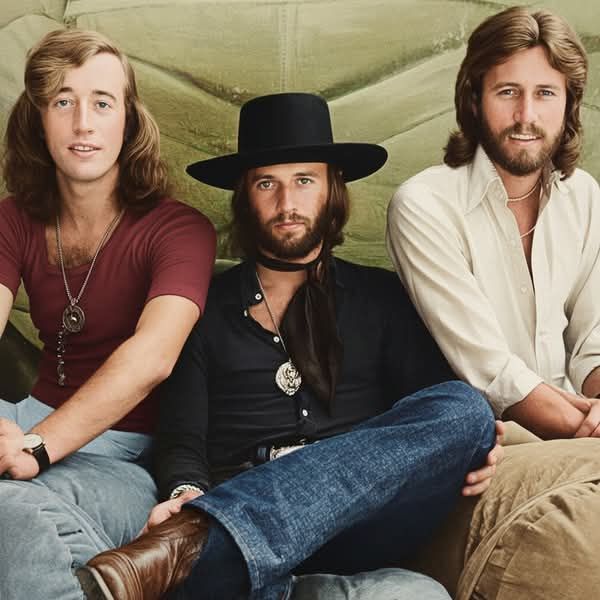
On Give Your Best, the Bee Gees turned devotion into something hushed, noble, and heartbreakingly human, offering one of the softest emotional centers on Odessa.
Give Your Best is not one of the first titles most listeners mention when they speak of the Bee Gees. It was never pushed as a major single, never given the same radio life as First of May or the larger landmarks in the group’s catalog. Yet that is part of what makes it so moving. Released in 1969 as an album track on the ambitious double LP Odessa, the song came wrapped inside one of the most ornate and emotionally complicated moments of the group’s early career. Give Your Best did not chart on its own because it was not issued as a standalone hit single, but Odessa itself performed respectably, reaching No. 10 on the UK Albums Chart and No. 20 on the US Billboard album chart. For a deep cut, that matters. It means the song belonged to a record many people brought home, held in their hands, and slowly discovered.
And Odessa was no ordinary record. With its famous red flocked cover, sweeping arrangements, and grand, literary mood, it stood apart even in a decade already full of bold musical statements. By 1969, the Bee Gees were no longer just the harmonizing brothers who had charmed audiences with elegant pop songs. They were reaching for something richer, more theatrical, more emotionally layered. The album was built with orchestral ambition, much of it shaped by the refined arrangements of Bill Shepherd, whose work helped give these songs their stately, almost old-world glow. Inside that setting, Give Your Best feels especially intimate. It does not need to shout. It simply opens its heart.
That quietness is part of the song’s power. Where some Bee Gees records dazzle with soaring hooks or dramatic phrasing, Give Your Best works in a more delicate register. It sounds like a promise made in a low voice. The title itself carries a kind of gentle moral weight: give what is finest in you, even when certainty is not guaranteed, even when life is complicated, even when love asks for tenderness rather than triumph. In that sense, the song reflects one of the most enduring qualities in the Gibb brothers’ writing. Beneath the harmony and polish, they often understood that the deepest songs are not always about grand declarations. Sometimes they are about effort, grace, and the quiet dignity of offering oneself fully.
There is also an added poignancy when one remembers where the group stood at the time. The making and release of Odessa came during a period of growing internal strain. The well-known disagreement over whether First of May or Lamplight should lead the single became part of a larger fracture, and before long Robin Gibb would temporarily leave the group. That history gives the whole album a fragile atmosphere in hindsight. Songs that might once have sounded merely elegant now feel suspended in a moment just before a family bond was tested in public. Give Your Best, heard in that context, becomes even more affecting. Its spirit of generosity and emotional openness stands in beautiful contrast to the tension that was quietly gathering around the band.
Musically, the song belongs to the lush late-1960s side of the Bee Gees, when their recordings often blended baroque pop, chamber textures, and close brotherly harmony into something instantly recognizable. The arrangement does not overpower the message. Instead, it supports the song with the kind of tasteful elegance that Odessa does so well. One hears not just melody, but care: care in the phrasing, care in the harmonies, care in the emotional pacing. It is the sound of songwriters who understood restraint. That is a harder art than many people realize.
What does Give Your Best mean at its core? It feels like a song about love as character rather than performance. Not love as spectacle, but love as conduct. The words and mood suggest that what matters most is not perfection, but sincerity. There is an almost old-fashioned decency in that idea, and it gives the song a lasting warmth. It speaks to the part of life where people understand that affection is measured not by noise, but by constancy, kindness, and the willingness to bring your best self to another person. That emotional maturity is one reason so many lesser-known Bee Gees songs age so beautifully.
In the shadow of bigger titles, Give Your Best has remained something of a hidden chamber inside the grand house of Odessa. But hidden is not the same as minor. In many ways, songs like this are what keep an album alive across decades. They reward the listener who stays, who returns, who listens beyond the obvious. And that has always been one of the quiet miracles of the Bee Gees: even when the spotlight falls elsewhere, the deeper catalog is filled with songs of uncommon feeling.
So if Give Your Best has been overlooked, it has also been preserved in a special way. It still waits where it has always been, inside one of the group’s most richly textured albums, carrying the tenderness of 1969 with remarkable grace. Not every great song needs a chart number to prove its worth. Some songs endure because they say something timeless in a voice gentle enough to be remembered for years.